
Skin Rejuvenation & Acne Solutions
Vitamin C serum may help improve the appearance of some flat dark spots, but it is not an instant eraser and does not treat every cause of pigmentation. Evidence depends on the formula and the condition studied. Start by identifying the marks, limiting irritation and protecting your skin from the sun. Express Med Spa’s nurse-practitioner-led team can discuss appropriate skin care; its skin-care shop is a place to explore available products, not proof that every serum suits every complexion.
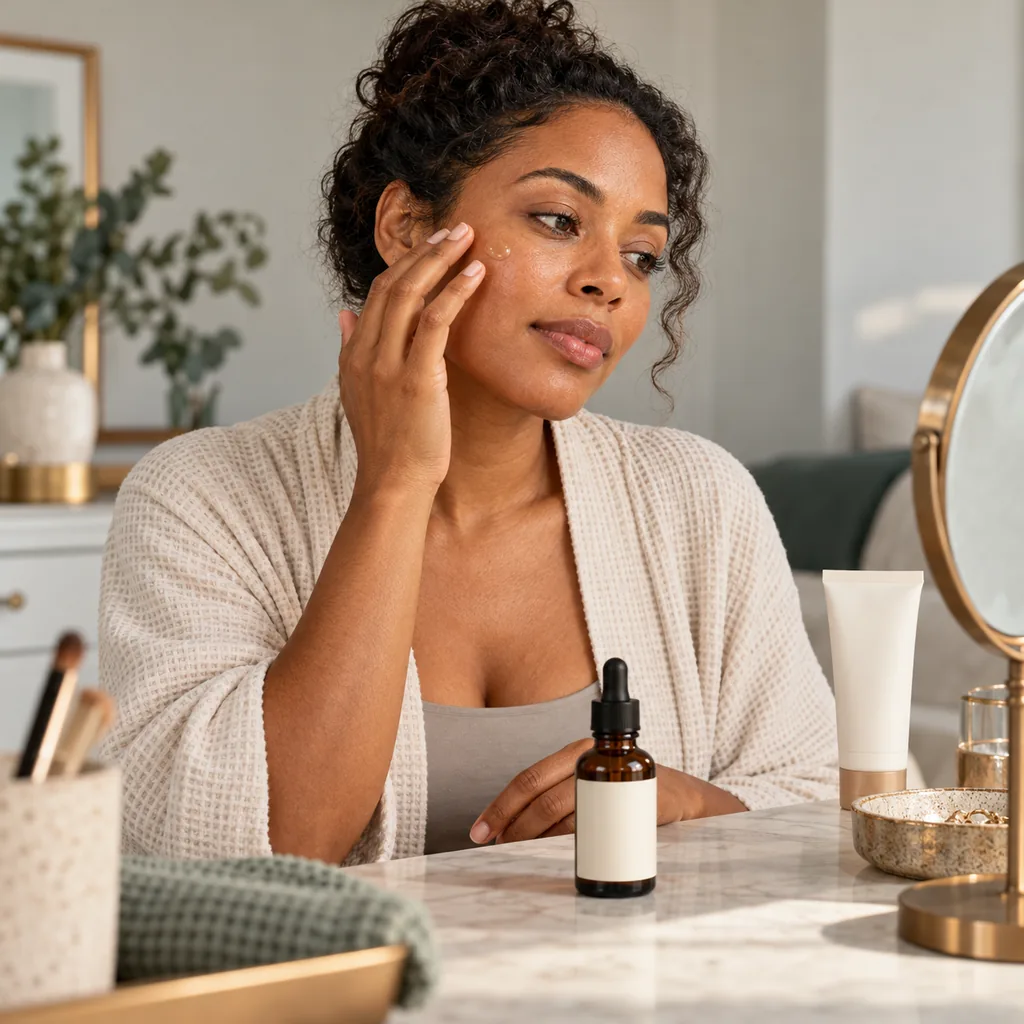
Which kind of dark spot are you trying to treat?
A flat mark left after acne, a patch of melasma and an individual sun-related spot can require different assessments. An indentation that creates a shadow is a texture concern rather than simply excess pigment. Naming the change helps prevent a product from being asked to do something it cannot do.
| What you notice | A useful next question |
|---|---|
| Flat marks after blemishes | Is inflammation still causing new pigment? |
| Recurring patches of discoloration | Could this be melasma or another condition needing assessment? |
| A new or changing individual spot | Does this need a medical evaluation before cosmetic treatment? |
| Indented acne texture | Would a scar consultation be more relevant than a serum? |
Arrange a medical evaluation for a changing, bleeding or otherwise concerning lesion. Do not repeatedly apply a brightening product to an unexplained spot to see if it disappears. Cosmetic treatment should not delay diagnosis.
What does the vitamin C research actually show?
One small randomized split-face trial studied 16 women with melasma over 16 weeks. It compared a 5% ascorbic acid cream with a 4% hydroquinone cream, while sunscreen was used daily. Subjective improvement favored hydroquinone; instrument-based color measurements did not show a statistically significant difference between sides.
This is evidence that topical ascorbic acid deserves consideration, not proof that any bottle labeled vitamin C will remove any dark spot. The trial was small, used a particular cream and involved melasma. Its 16-week duration is a study period, not a guaranteed timeline for your serum.
It also does not justify recommending the comparator medicine for your own skin. A prescribing decision requires a clinician. When evaluating a product claim, ask whether the evidence involves the same ingredient, formulation, skin condition and outcome being advertised.
Choose a tolerable formula rather than chasing a percentage
Ascorbic acid is one form of vitamin C; products may use other forms or combine several ingredients. A percentage on the label does not by itself show how the product will perform on your skin. Packaging, formulation and instructions matter, and a stronger-looking number is not a promise of better results.
Check the ingredient list, storage directions and expiration or use-after-opening guidance. Ask a clinician or pharmacist about a formula if you have a history of irritation or a complex prescribed routine. This guide does not endorse a particular concentration or claim that one brand is clinically superior.
Introduce changes gradually. Trying several new brightening products at once makes it difficult to identify the cause if your skin becomes irritated. More irritation can make pigment management harder rather than accelerating the result.
Build a simple routine around sun protection
The AAD dark-spots guidance emphasizes addressing the cause, avoiding irritating products and using sun protection. A serum cannot compensate for ongoing inflammation or unprotected sun exposure. A broad-spectrum sunscreen with SPF 30 or higher is an important starting point; ask about a tinted option when visible light is relevant to your pigmentation.
- Use a gentle cleanser suited to your skin.
- Apply the serum according to its own instructions, introducing it cautiously.
- Use a moisturizer if needed for comfort and barrier support.
- Use appropriate sun protection, including sunscreen, shade and clothing.
- Review persistent or worsening pigment with a qualified clinician.
If your clinician has prescribed a routine, ask before adding or replacing products. This general sequence is not a reason to stop a medicine. The aim is a consistent, tolerable plan rather than the largest possible collection of active ingredients.
How long should you give a routine?
Pigment care usually requires patience and reassessment, but there is no single evidence-based countdown that applies to every vitamin C serum and every type of dark spot. The small melasma trial lasted 16 weeks. That does not establish that everyone should see a defined change at four weeks, or that waiting longer will always solve the problem.
Consider a person whose acne is still causing new marks each month. A serum alone may not keep pace with the ongoing inflammation. Another person may have recurring patches that need a different diagnosis and plan. In both situations, identifying the cause is more useful than repeatedly buying a stronger serum.
Photographs taken under similar lighting can help you discuss change with a clinician. Avoid judging a result only from an image taken with a different filter, exposure or makeup. If symptoms or discoloration worsen, do not wait out an arbitrary online timetable.
When irritation or another treatment changes the plan
Stinging, redness, burning or a rash can signal that a product is not being tolerated. Stop the product and seek advice if a reaction occurs, especially if symptoms persist or are significant. Severe swelling or breathing problems require urgent medical care.
Do not add scrubs, peels and several brightening actives simultaneously to force a faster result. If you are considering a procedure, tell the practitioner which products you use and follow the instructions for that treatment. A clinician can advise when to pause or restart an ingredient.
Our microdermabrasion facial guide explains the limits of superficial exfoliation. For indentations rather than flat pigment, read microneedling for acne scars. These are separate questions, and none is a reason to skip an assessment of an unexplained spot.
Frequently asked questions
How to use vitamin serum?
Follow the instructions for the specific product and introduce it gradually into a gentle routine. Use appropriate moisturizer and sun protection, and avoid adding several new actives at once. If you use prescribed skin medicines or have sensitive skin, ask a clinician how the serum fits your existing plan.
Is vitamin C serum effective for dark spots?
Topical vitamin C may improve some pigmentation, but the evidence does not show that every serum treats every dark spot. A small melasma trial studied a particular ascorbic acid cream over 16 weeks with daily sunscreen. Formula, tolerability, the cause of pigment and sun protection all affect the discussion.
What is the best serum for dark spots and discoloration?
There is no single best serum for every cause of discoloration or every skin type. Choose a product around a clear assessment, tolerability and credible evidence rather than the highest percentage or a dramatic promise. Persistent, recurring or changing pigment deserves professional advice before you keep switching products.
What are the side effects of vitamin C serum?
A vitamin C product can cause irritation such as stinging, redness, burning or a rash, depending on the formula and your skin. Stop using it and seek advice if a reaction occurs. Introduce products cautiously, and do not assume that stronger irritation means the serum is working better.
This article provides general education. A qualified medical professional should assess your individual concerns before treatment.
AI illustration use
These terms identify the AI-generated illustration on this page. This AI-generated editorial illustration is provided for educational reuse with a visible credit to Express Med Spa and an AI disclosure. It depicts a conceptual scene, not actual staff, premises or a treatment result. No exclusive copyright ownership is claimed in the purely AI-generated illustration. For other uses or questions, contact Express Med Spa. These terms apply only to the specifically identified image on this page.
Meet our nurse practitioner-led team.That’s exactly why we offer free consults.
Meet our nurse practitioner-led team.
That’s exactly why we offer free consults.
🧬 Personalized care that fits your goals.

Stefanie Drozd, APRN
Founder & Nurse Practitioner
354
5 Star Average Rating
Five Star Reviews... and growing
Let’s Talk About Your Skin Goals
You don’t have to guess what treatment is right for you. Book a complimentary consultation and let our licensed professionals help you choose the safest and most effective option. We will walk you through your options and help you decide what makes the most sense for your skin, goals, and budget.Express Med Spa Team
Share
Personalized, Judgment-Free Care
That’s exactly why we offer free consults.
🧬 Just personalized care that fits your goals.
Stefanie Drozd, APRN
Founder & Nurse Practitioner
You don’t have to guess what treatment is right for you. Book a complimentary consultation and let our licensed professionals help you choose the safest and most effective option. We will walk you through your options and help you decide what makes the most sense for your skin, goals, and budget.Express Med Spa Team
354
5 Star Average Rating
Five Star Reviews... and growing
Let’s Talk About Your Skin Goals