Menopause and Perimenopause Hormone Therapy in Chicagoland
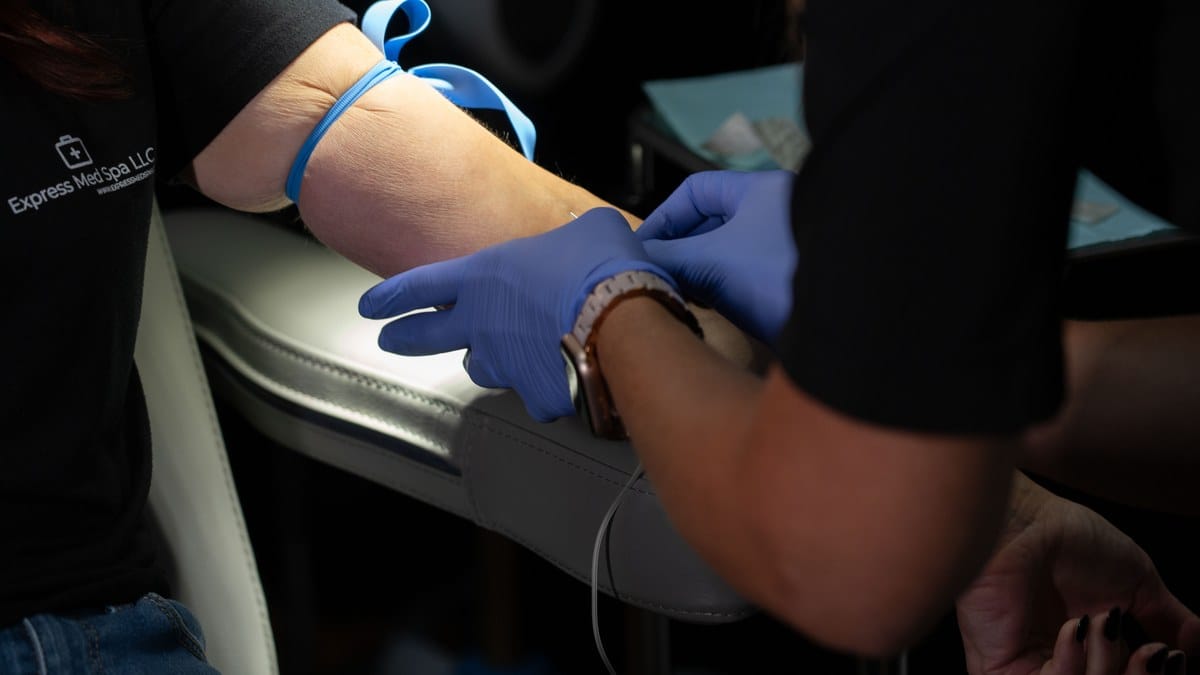
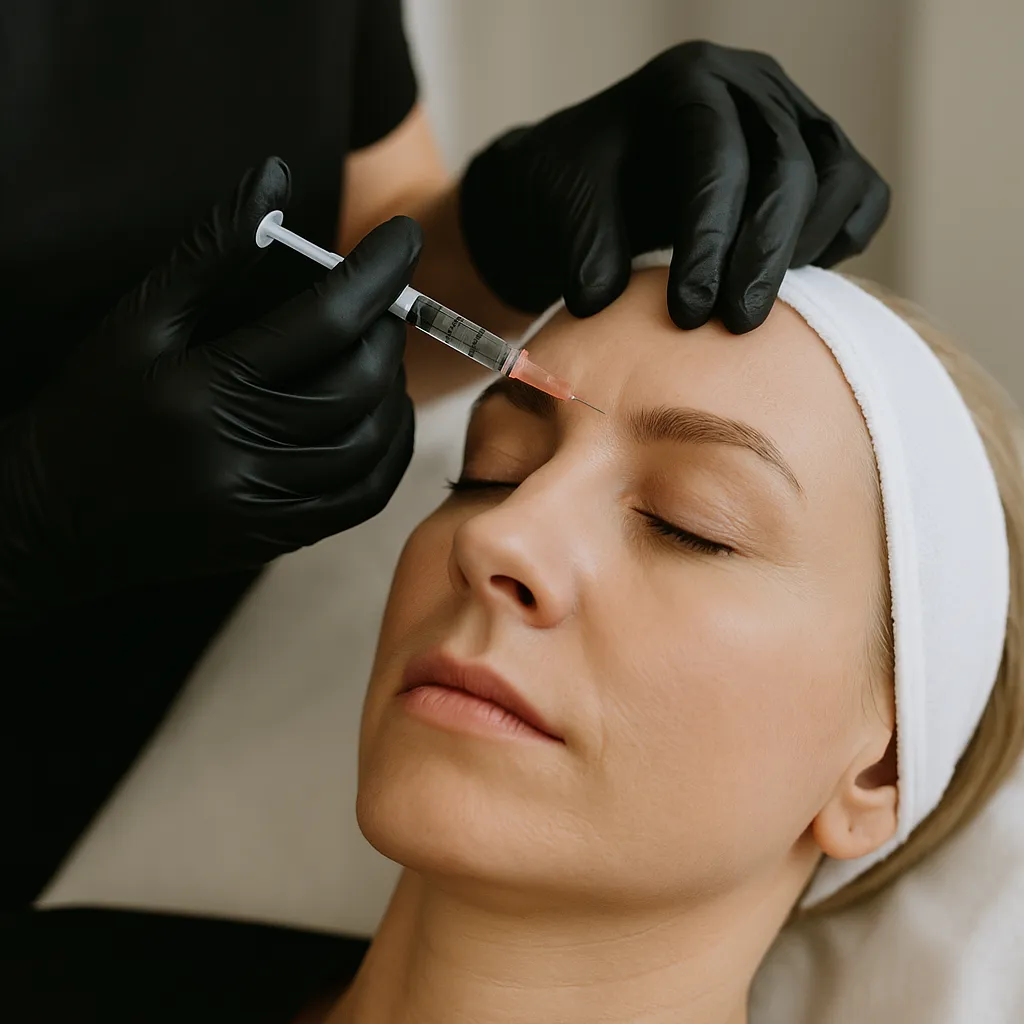
Menopause and perimenopause hormone therapy at Express Med Spa is nurse-practitioner-led. Your first visit is a consultation with a physical exam and a hormone panel, and your prescription recommendations follow once results are back, with in-office estradiol injections available to established patients at all four Chicagoland clinics.
Book Your Consultation
Treatment TIme
15-30 min
DownTime
minimal
RESULTS TIMELINE
Individual, reviewed at follow-up
Result Last
Ongoing with repeat labs
BEST FOR
Hot flashes, night sweats, sleep changes, vaginal dryness

How does menopause hormone therapy work?
Through perimenopause and menopause the ovaries make less estrogen, which is what drives hot flashes, night sweats, broken sleep and vaginal dryness. Hormone therapy replaces some of it using estradiol, the same form of estrogen the body produces. Dosing starts low and is adjusted against how you respond, with lab work informing the picture. If you still have a uterus, a progestogen is added to the plan.
What is hormone therapy used for?
The FDA has approved hormone therapy products for moderate to severe hot flashes and night sweats, for vaginal dryness and discomfort, and for preventing bone loss after menopause. Its labeled recommendation is to begin systemic therapy within 10 years of menopause onset or before age 60. At Express Med Spa the program covers a consultation with labs, prescription therapy, in-office estradiol injections and pellets, at all four clinics.
What happens at the first appointment?
Plan on about 30 minutes. You complete a symptoms intake form, then your nurse practitioner reviews your history, performs a physical exam and draws a lab panel covering a complete blood count, estradiol and testosterone. Prescription recommendations follow once results return. The consultation is $99 when labs bill to insurance, or $285 including cash-priced labs, and you are told which applies first.
How often will I come in?
Hormone therapy is ongoing care rather than a one-off procedure. Estradiol office injections are given about every 3 to 4 weeks in roughly 15 minute visits, and a prescription you fill needs no visit in between. Follow-up visits with repeat labs are scheduled around dose changes, and run $59 with insurance-billed labs or $212 without. Symptom response is individual, so we adjust against how you respond instead of promising a timeline, and how long you stay on therapy is reviewed at each visit.
Office injection or a prescription?
A prescription you fill keeps dosing in your hands and changes take effect with the next dose. Office injections mean nothing to remember between visits but a fixed dose for the interval. The pellet on our menu is testosterone, not estrogen, so it is a separate decision. In February 2026 the FDA approved labeling changes on six products removing cardiovascular, breast cancer and dementia statements from the boxed warning; the endometrial cancer warning remains for estrogen-alone products.
About This Treatment
This page covers how hormone therapy works through perimenopause and menopause, what your first appointment involves, what it costs, and how the delivery options compare. Every plan starts with a consultation, a physical exam and lab work. Medically reviewed by Stefanie Drozd, MSN-APRN.
Treatment Pricing
From
Price
$99
Menopause hormone therapy starts at $99 for the initial consultation with lab work when your labs bill to insurance. When you pay cash for labs, the initial consultation including those labs is $285. Follow-up visits with labs are $59 with insurance or $212 without. For established patients, an estradiol office injection is $55. Hormones themselves are purchased separately and are not included in any consultation fee. The testosterone pellet listed under hormone replacement is a different therapy and is priced on its own page. Prices are subject to change and are based on a planned consultation with staff.
View our full med spa price menu
*Pricing is subject to change.
Who Menopause and Perimenopause Hormone Therapy in Chicagoland is For
Good Candidates? Is This Right for You?
Symptoms That Bring Women In
Most women who come in for hormone therapy are dealing with some combination of:
- Hot flashes and night sweats
- Sleep that breaks up through the night
- Vaginal dryness or discomfort
- Cycle changes through perimenopause, including cycles arriving closer together or further apart
- Mood changes, irritability, or difficulty concentrating
- Joint aches, and changes in skin or hair
You do not need all of them, and you do not need to be through menopause. Perimenopause, the years of hormonal change leading up to it, is when many women first notice symptoms and is a normal reason to book.
Who Is a Good Candidate
Hormone therapy may suit you if you are in perimenopause or menopause, your symptoms are affecting daily life, and you are ready to start with a consultation, a physical exam and lab work. Candidacy is confirmed from your results and history, not from symptoms alone.
The FDA’s labeled recommendation is that systemic hormone therapy begin within 10 years of the onset of menopause, or before age 60. We treat that as guidance for the discussion rather than a rule applied at the door.
In-office estradiol injections and pellet insertion are available only to established patients who have completed the full workup and consultation.
Who Is Not a Candidate
Estrogen therapy is not appropriate for everyone. Undiagnosed abnormal vaginal bleeding needs to be evaluated by a clinician before any estrogen is considered, rather than treated with it. Hormone therapy is also generally avoided if you have a known or suspected estrogen-dependent cancer, a history of blood clots or stroke, active liver disease, a known clotting disorder, or if you are or may be pregnant. The full list is below and every item is reviewed individually at your consultation.
Risks and Ongoing Supervision
In February 2026 the FDA approved labeling changes that removed cardiovascular disease, breast cancer and probable dementia from the boxed warning on menopausal hormone therapy products. The boxed warning for endometrial cancer remains on systemic estrogen-alone products, which is why a progestogen forms part of the plan when you still have a uterus.
Hormone therapy is not risk free, and no plan is issued here without an exam, lab work and follow-up. Your nurse practitioner reviews current risks and benefits against your own history, and dosing is adjusted from repeat labs rather than left to run.
Contraindications & Risks / Side Effects
Contraindications
Undiagnosed, persistent or recurring abnormal vaginal bleeding
Known, suspected, or a history of breast cancer
Known or suspected estrogen-dependent cancer
Active or a history of deep vein thrombosis or pulmonary embolism
Active arterial thromboembolic disease, or any history of stroke or heart attack
Known clotting disorder, including protein C, protein S or antithrombin deficiency
Active liver disease or liver impairment
Known or suspected pregnancy, or currently breastfeeding
Known hypersensitivity to estradiol or to any component of the formulation
Risks / Side Effects
Soreness, redness or bruising at the injection site
Breast tenderness or swelling
Headache
Nausea
Fluid retention and bloating
Mood changes
Irregular or breakthrough vaginal bleeding or spotting, which should always be reported
Increased risk of endometrial cancer when systemic estrogen is used without a progestogen in a woman who still has a uterus
Blood clots, stroke, heart attack and gallbladder disease are recognized risks of systemic estrogen therapy and are reviewed against your individual history
Breast cancer risk remains part of the labeled safety picture for systemic hormone therapy and is weighed against your personal and family history at the consultation
Risk differs by whether estrogen is used alone or with a progestogen, by the form prescribed, and by your age and how long since menopause began
Chicagoland Medical Spa
EXPRESS MED SPA LOCATIONS
Experience our expert aesthetic treatments and personalized care at our convenient Express Med Spa locations. Whether you're looking for Botox, weight loss programs, or laser hair removal, we provide advanced beauty and wellness services across our four Chicago suburbs locations.

Med Spa Frankfort, IL
Our Express Med Spa Frankfort
clinic serves Will County with nurse practitioner-led Botox,
fillers, GLP-1 weight loss,
and laser hair removal.
Frankfort, IL
60423
(708) 840-8443
Get Directions
Med Spa Shorewood, IL
Our Express Med Spa Shorewood
clinic serves Joliet, Plainfield, and the I-80 corridor
with injectables, GLP-1 weight loss,
and skin care.
Shorewood, IL
60404
(877) 363-3772
Get Directions

Med Spa La Grange, IL
Our Express Med Spa La Grange
clinic serves the western suburbs with Botox, fillers,
IV therapy,
and GLP-1 medical weight loss.
La Grange, IL
60525
(708) 847-0872
Get Directions

Med Spa Mount Greenwood, Chicago IL
Our Express Med Spa Mount Greenwood
clinic serves Chicago's South Side and southwest Cook County
with nurse practitioner-led injectables, GLP-1 weight loss.
Chicago, IL
60655
(877) 363-3772
Get Directions

Med Spa Manteno, IL
Our Express Med Spa Manteno
clinic serves Manteno and nearby communities
with nurse practitioner-led injectables, GLP-1 weight loss.
Manteno, IL
60950
(877) 363-3772
Get Directions
Each medical spa location is led by a licensed Nurse Practitioner, with a focus on safe, results-driven care.
What To Expect
Pre & Post Treatment Care
Pre-Care Instructions
Complete the symptoms of menopause intake form before your appointment
Bring a full list of everything you currently take, including supplements and any hormonal medication or contraception
Bring your personal and family history of blood clots, stroke, and breast, uterine or ovarian cancer
Tell us whether you have had a hysterectomy, since it determines whether a progestogen is part of your plan
Ask whether your labs will bill to insurance, so you know which consultation price applies
Bring recent results if another clinician has already run a hormone panel for you
Post-Care Instructions
Keep the injection site clean and dry for the rest of the day
Mild soreness at the site is common and usually settles within a day or two
Report any unusual, heavy or unexpected vaginal bleeding to your clinician rather than waiting for your next visit
Keep a short note of symptom changes between visits so dosing can be adjusted accurately
Attend your scheduled follow-up and repeat labs, since dose changes are made from results
Seek care promptly for chest pain, shortness of breath, severe headache, vision changes, or swelling or pain in one leg
CommON QUESTIONS
Menopause and Perimenopause Hormone Therapy in Chicagoland FAQs
 Nurse Jackie Umgelder 09.24.26
GLP-1 vs. Phentermine: Which Weight Loss Medication Fits You?
GLP-1 medications and phentermine work differently, are taken differently, and are screened differently. See how they compare, and how our nurse practitioner team decides…- Nurse Jackie Umgelder 09.24.26
Who Qualifies for Weight Loss Injections? A Free Consult Decides (Video)
Who qualifies for weight loss injections? Watch Jackie Umgelder, Lead Medical Assistant at Express Med Spa, explain how a free consultation with our nurse…  Nurse Stefanie Drozd 09.23.26
When to Start Preventative Botox (Baby Botox): Age, Units, and Pricing
Baby botox starts when lines linger, not on a birthday. Age signs, 30 units for $329, and when a standard dose is the more… Nurse Stefanie Drozd 09.22.26
Microneedling with PRP Cost: Face, Acne Scars, and What You Actually Pay for Results
Microneedling with PRP cost at Express Med Spa is $490 for a full face. Series math for acne scars, vampire facial cost, and when…- Nurse Stefanie Drozd 09.21.26
Botox for TMJ: What It Helps, What It Cannot Fix, and How Many Units You Need
Botox for TMJ can lower clenching force when the masseter is the problem. What it helps, what it cannot fix, typical units, and when… - Nurse Stefanie Drozd 09.19.26
Who Is a Good Candidate for Laser Hair Removal? (Video)
Who is a good candidate for laser hair removal? Watch Express Med Spa esthetician Kaitlin Knapp explain why darker, coarser hair responds and why… - Nurse Stefanie Drozd 09.19.26
Does Laser Hair Removal Work on Blonde, Gray, or Red Hair?
Laser hair removal usually does not work well on blonde, gray, white, or red hair because the laser targets pigment. Here is what to…  Nurse Lily Zelaya 09.18.26
How to Get Rid of Bunny Lines with Xeomin | Quick Nose Wrinkle Fix at Express Med Spa La Grange
Learn how Xeomin can quickly smooth away bunny lines on your nose. Quick nose wrinkle fix at Express Med Spa in La Grange, IL.…- Nurse Lily Zelaya 09.18.26
How to Get Rid of Bunny Lines with Xeomin (and Botox)
Bunny lines are the diagonal, crinkling wrinkles that appear on both sides of the bridge of your nose when you scrunch your face, laugh,…  Nurse Lily Zelaya 09.18.26
Watch: Why Our Nurse Injector Switched to Xeomin | Xeomin vs. Botox
Lily Zelaya, RN, explains why she switched to Xeomin over Botox, how double-filtration removes excess proteins to prevent resistance, and what to expect.…