Spider Vein Treatment (Sclerotherapy) in Chicagoland
Those fine red, blue, and purple lines on your legs are spider veins, and they respond well to sclerotherapy. Our nurse-practitioner-led team injects Asclera, an FDA-approved sclerosing agent, to close the vein so your body can gradually clear it. Available at our Frankfort, La Grange, Shorewood, and Mount Greenwood clinics.
Book Your Consultation
Treatment TIme
30-45 min
DownTime
minimal
RESULTS TIMELINE
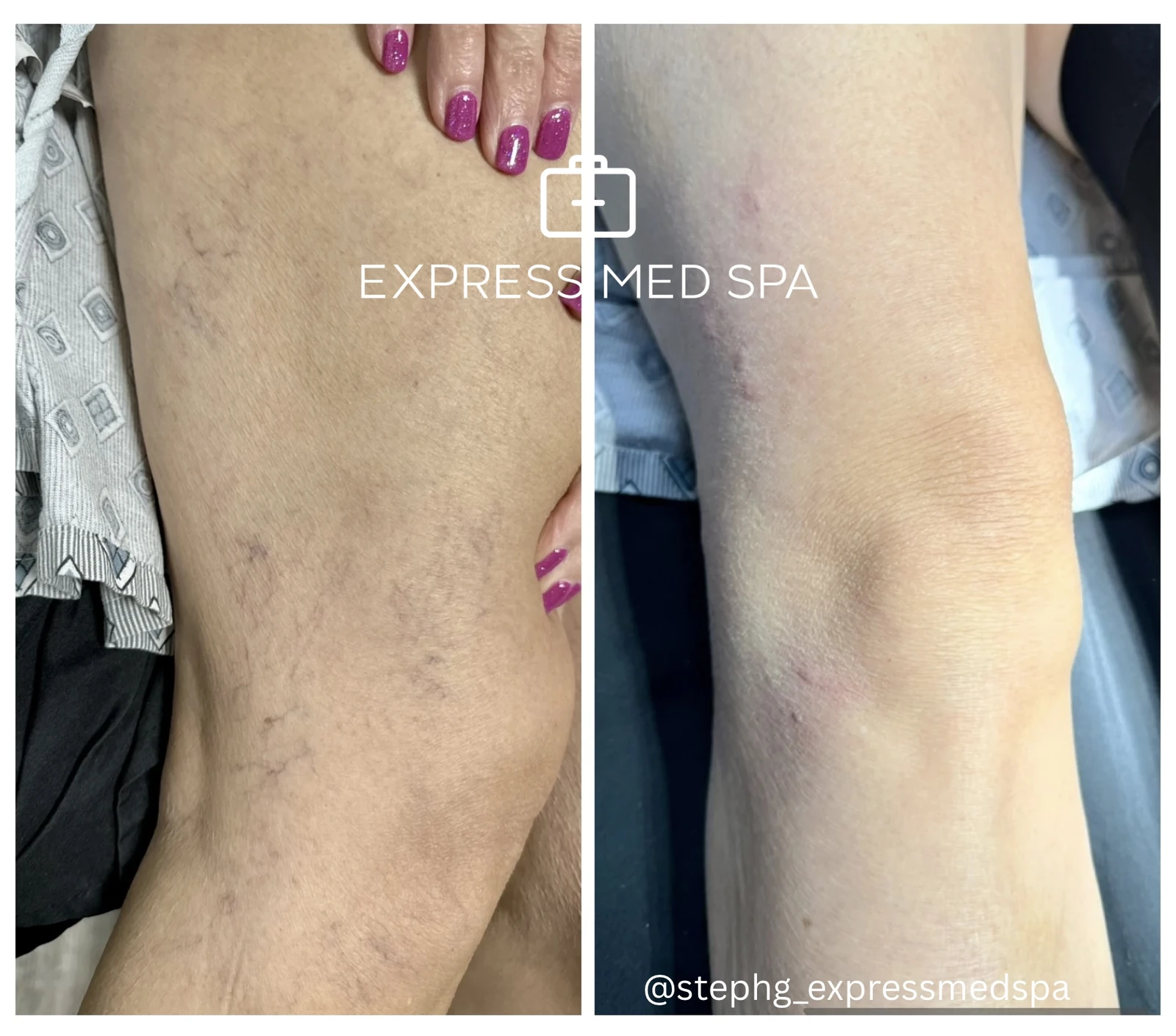
Veins fade over about 3 to 6 weeks
Result Last
Treated veins do not generally return, though new veins can form over time
BEST FOR
Spider veins on the legs, reticular veins, visible ankle and thigh veins

How Does Sclerotherapy Work?
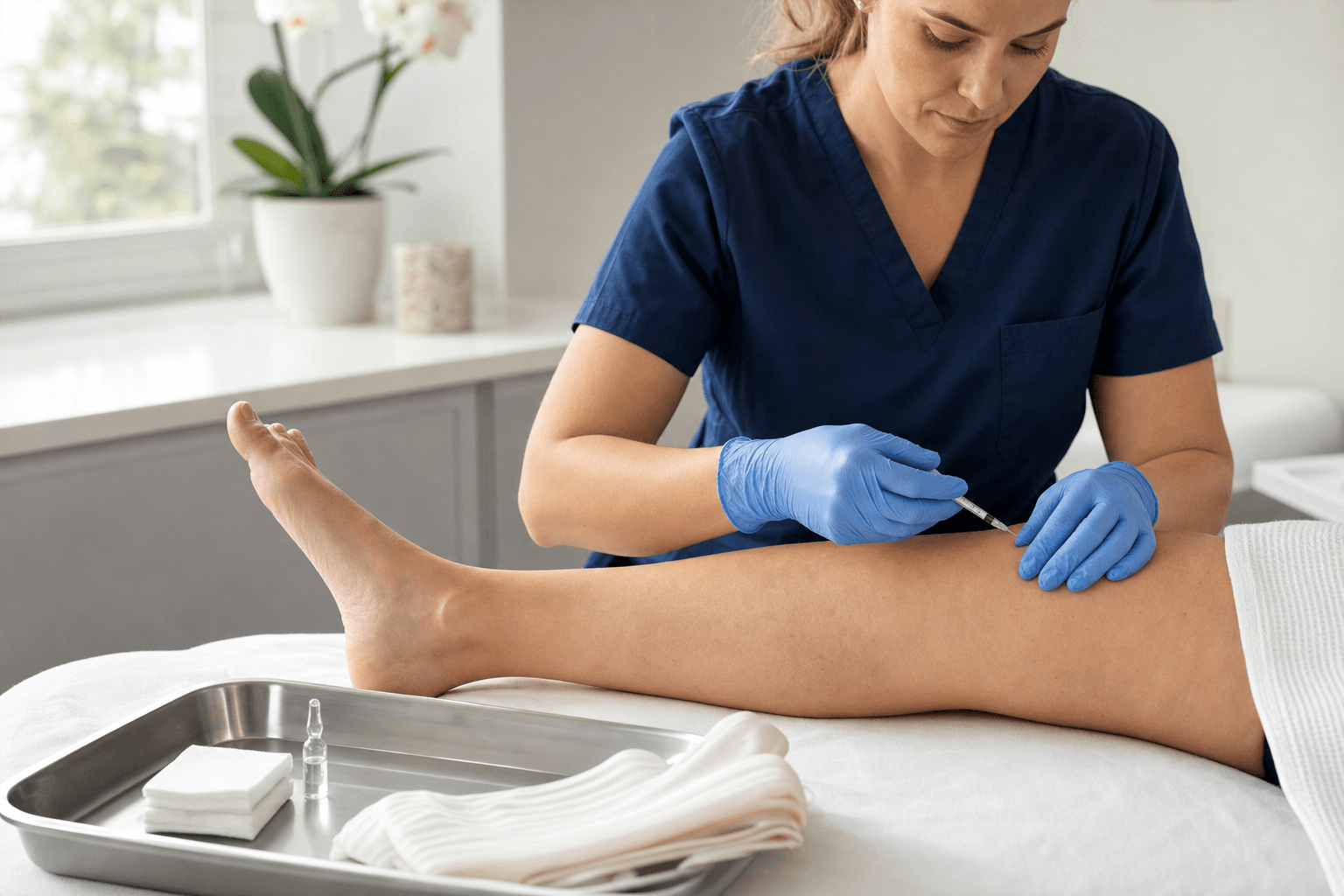
Your provider injects Asclera (polidocanol) directly into the vein through a very fine needle. The solution irritates the vein's inner lining so the vessel closes off, and over the following weeks the body replaces it with fibrous tissue that fades from view. Blood continues through your other healthy veins. The concentration used is matched to the size of the vein being treated.
Which Veins and Areas Can Be Treated?
Asclera is FDA-approved for the lower extremity: spider veins up to 1 mm across and reticular, or feeder, veins between 1 and 3 mm. That covers the thighs, calves, ankles, feet, and behind the knee. Asclera has not been studied in veins larger than 3 mm, and facial vessels are treated with IPL Photofacial instead.
What Happens at the Appointment?
Your provider examines your legs and maps the veins using AccuVein, a near-infrared scanner that projects the vein pattern onto your skin so the deeper feeder veins can be seen. Then you lie down for a series of small injections. Compression stockings go on before you stand, and you walk for 15 to 20 minutes while the team observes you. Please bring your stockings.
When Will I See Results?
Treated spider veins usually fade over about 3 to 6 weeks. Bruising and brown discoloration at the injection sites are common early on. Bruising settles within days to weeks, while pigment can take several months. Most people need more than one session, spaced 1 to 2 weeks apart. Veins that respond well generally do not return, though new ones can form.
Sclerotherapy or Laser Treatment?
For spider veins on the legs, an injection reaches the vein directly, which is why sclerotherapy has been the long-established approach. For vessels on the face we use IPL Photofacial instead, since Asclera is approved only for the lower extremity. Compression stockings ease aching and swelling but do not clear veins that are already visible.
About This Treatment
Sclerotherapy treats the small surface veins that show through the skin on your legs, ankles, and thighs. Below is how the injection works, what your appointment involves, and what to expect while the treated veins fade.
Treatment Pricing
From
Price
$295
Starting from $295 per vial. One vial can treat a small region of veins, and the number of vials needed varies with the area being treated, so the exact cost is confirmed at your complimentary consultation. Price is subject to change.
View our full med spa price menu
*Pricing is subject to change.
Who Spider Vein Treatment (Sclerotherapy) in Chicagoland is For
Good Candidates? Is This Right for You?
Concerns Sclerotherapy Addresses
Sclerotherapy is for visible surface veins on the legs: red, blue, or purple lines and web-like clusters on the thighs, calves, and behind the knee, flat blue-green reticular veins, and the veins around the ankles and feet that often make people avoid sandals or shorter hemlines. It is a cosmetic treatment for how the veins look, not a treatment for circulatory disease.
Who Is a Good Candidate
You are likely a good candidate if you are a healthy adult with uncomplicated spider veins 1 mm or smaller, or reticular veins between 1 and 3 mm, on the lower extremity, and you are able to walk normally and wear compression stockings for several days afterward. Realistic expectations matter too: most people need more than one session, and the goal is a clear improvement in appearance rather than guaranteed removal of every vessel.
Who Should Not Have This Treatment
Sclerotherapy with Asclera is not appropriate if you have a known allergy to polidocanol or an acute blood-clotting condition, which are the two contraindications on the FDA label. It is also not recommended during pregnancy, since there is minimal benefit in treating these veins while pregnant and they often improve on their own after delivery. If you are breastfeeding, talk with your provider first, as the label advises pumping and discarding milk for up to 8 hours afterward. Safety in patients under 18 has not been established.
When You Need a Vein Specialist Instead
Tell us if your veins bulge above the skin, feel rope-like, or come with aching, swelling, heaviness, night cramps, or skin changes around the ankle. Those point to larger varicose veins or underlying venous insufficiency, which need a vascular evaluation rather than a cosmetic injection. A personal or family history of blood clots, deep vein thrombosis, or pulmonary embolism also needs review before any treatment is scheduled.
What About Veins on My Face?
Asclera is approved for the lower extremity only, so facial vessels are not treated with injections here. Broken capillaries and redness on the nose and cheeks are treated with IPL Photofacial instead.
Chicagoland Med Spa Reviews
What Clients Say About Spider Vein Treatment (Sclerotherapy) in Chicagoland
 Kristina is AMAZINGGG! I’ve been going to Express Med Spa for a few years now and recently started going to the Shorewood location and Kristina has been awesome. She listens. She educates and you can tell she caresLeslie LathropGoogle Review
- I have been going to Mount Greenwood Express MedSpa for the past few months and have had nothing but great experiences. The facility is always clean and welcoming, the staff is friendly and professional, and the service is consistently exceptional. Yesterday, I had the opportunity to receive my treatment from the owner, and she was absolutely incredible. Her knowledge, attention to detail, and genuine care made the experience even better. I highly recommend Mount Greenwood Express MedSpa to anyone looking for outstanding service and results!Maureen DownsGoogle Review
- I have had multiple services done at Express Med Spa in Frankfort. The attention to detail is absolutely amazing and everyone is so friendly. The pricing is very affordable and the monthly specials are incredible. Thank you Stephanie G and Tami W. for your excellent service! I will be back real soon ☺️Victoria GaffneyGoogle Review
- I had a great experience with Kristin J. who did my cheek filler. Thank you for your soft and subtle approach and for easing my concerns. My results are amazing!! The entire process was very professional yet I felt so welcomed. Thanks Express Med Spa.Victoria GaffneyGoogle Review
- I have had nothing but amazing experiences at Express Med Spa Lagrange! I was a little unsure about what to do and Angelika helped me so much with a complimentary consultation! We decided on a lip flip just to enhance what I already have and I love it!! Angelika made sure I felt comfortable and well informed the entire time. Plus, her knowledge made the process so super quick. 5/5 starsalexa ramosGoogle Review
- Kaitlin is amazing! I went to Lagrange to have a self care day and I got a aqua facial. My skin feels so soft and refreshed for this winter, she was so nice and made me feel very comfortable. thank you express med spaAubree JantolakGoogle Review





Contraindications & Risks / Side Effects
Contraindications
Known allergy to polidocanol
Acute thromboembolic disease, including an active blood clot
Pregnancy, since there is minimal benefit in treating these veins during pregnancy
Breastfeeding, unless you have discussed pumping and discarding milk for up to 8 hours after treatment
A personal history of deep vein thrombosis or pulmonary embolism, which requires review first
Reduced mobility or an inability to walk after treatment or wear compression
Under 18 years of age, as safety and effectiveness have not been established
Varicose veins larger than 3 mm, which have not been studied with Asclera and need a vascular evaluation
Risks / Side Effects
Bruising at the injection sites, which is the most common effect and settles over days to weeks
Redness, irritation, or mild swelling along the treated vein
Brown or tan discoloration along the treated vein, which usually fades over several months but can persist
Discomfort or stinging at the injection sites during and shortly after treatment
Trapped blood in a treated vein, which your provider can release at a follow-up visit
Small raised areas or firmness along the vein that resolve as it breaks down
Telangiectatic matting, a fine blush of tiny new vessels near a treated area that usually settles over months
Superficial thrombophlebitis, a tender inflamed segment of vein that is treated with compression and movement
Incomplete clearance, or a treated vein reopening and needing another session
Rare but serious: allergic reaction including anaphylaxis, blood clot, or tissue injury at the injection site
Medical Spa in Illinois
EXPRESS MED SPA LOCATIONS
Experience aesthetic treatments provided by licensed clinicians and personalized care at any Express Med Spa. Whether you're looking for Botox, weight loss programs, or laser hair removal, we provide advanced beauty and care in Frankfort, La Grange, Shorewood and Mount Greenwood.

Med Spa Frankfort, IL
Our Express Med Spa Frankfort
clinic serves Will County with nurse practitioner-led Botox,
fillers, GLP-1 weight loss,
and laser hair removal.
Frankfort, IL
60423
(708) 840-8443
Get Directions
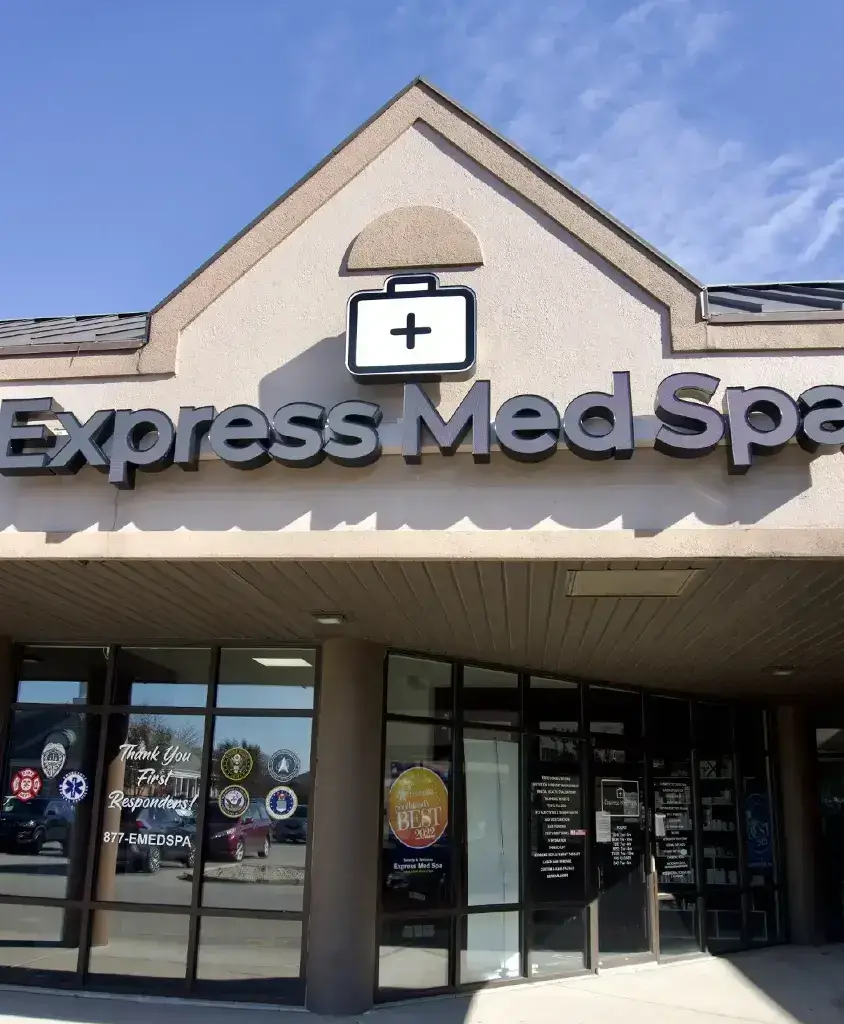
Med Spa Shorewood, IL
Our Express Med Spa Shorewood
clinic serves Joliet, Plainfield, and the I-80 corridor
with injectables, GLP-1 weight loss,
and skin care.
Shorewood, IL
60404
(815) 458-5501
Get Directions
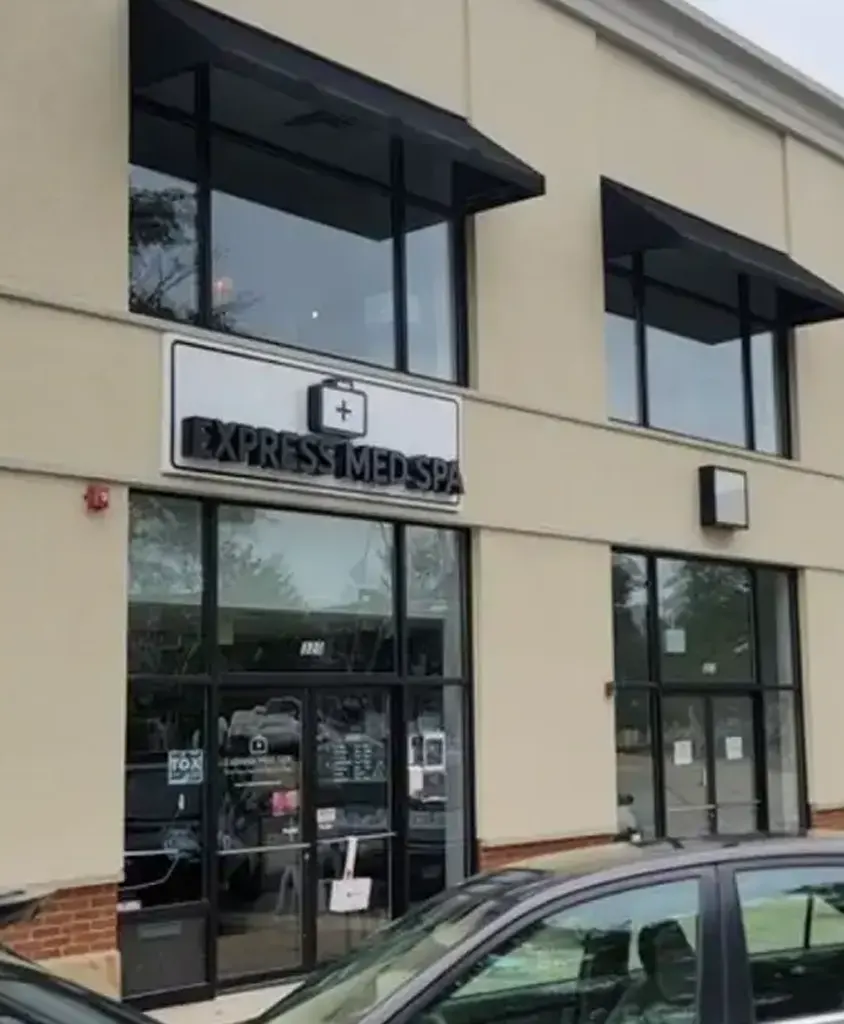
Med Spa La Grange, IL
Our Express Med Spa La Grange
clinic serves the western suburbs with Botox, fillers,
IV therapy,
and GLP-1 medical weight loss.
La Grange, IL
60525
(708) 847-0872
Get Directions
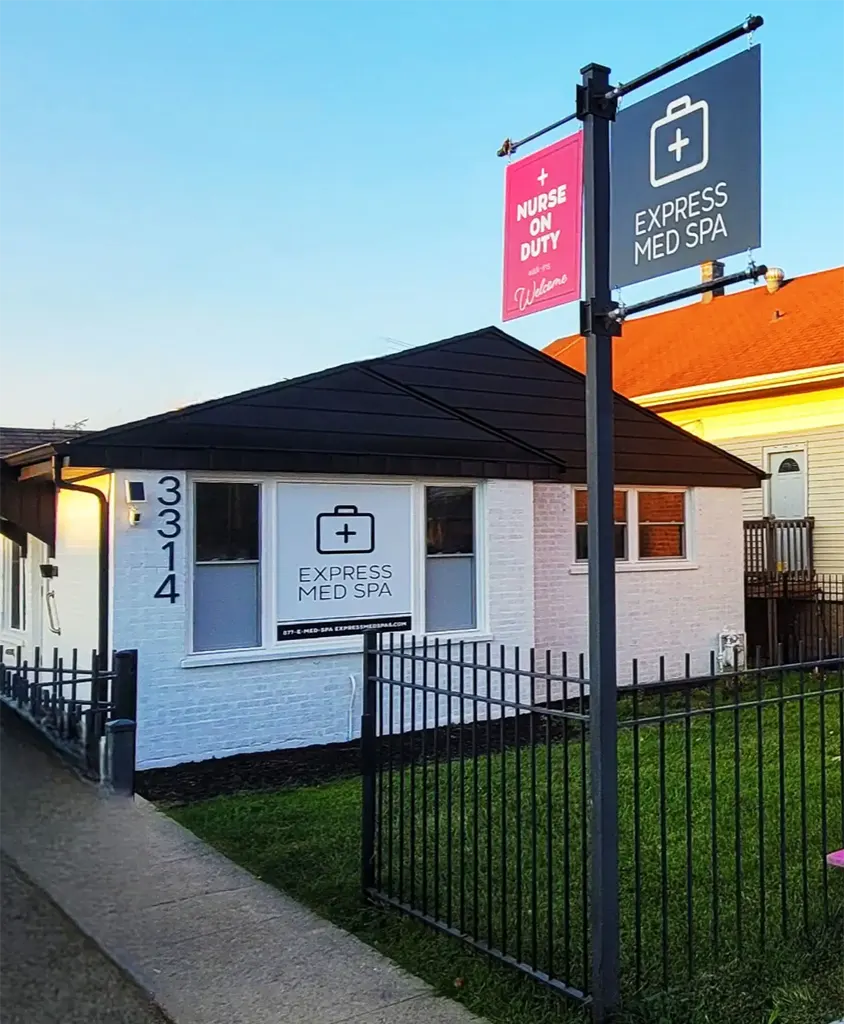
Med Spa Mount Greenwood, Chicago IL
Our Express Med Spa Mount Greenwood
clinic serves Chicago's South Side and southwest Cook County
with nurse practitioner-led injectables, GLP-1 weight loss.
Chicago, IL
60655
(877) 363-3772
Get Directions

Med Spa Manteno, IL
Our Express Med Spa Manteno
clinic serves Manteno and nearby communities
with nurse practitioner-led injectables, GLP-1 weight loss.
Manteno, IL
60950
(815) 401-1951
Get Directions
Each medical spa location is led by a licensed Nurse Practitioner, with a focus on safe, results-driven care.
What To Expect
Pre & Post Treatment Care
Pre-Care Instructions
Bring your compression stockings to the appointment, or plan to buy a pair at the clinic
Wear or bring loose shorts so your legs are easy to access
Do not apply lotion, oil, or self-tanner to your legs on the day of treatment
Avoid sun exposure and tanning beds on the areas being treated beforehand
Shave your legs the day before rather than the morning of, if you shave
Eat a normal meal before your appointment and drink water
Tell your provider about any blood thinners, hormone therapy, or supplements you take
Tell your provider about any history of blood clots, and if you could be pregnant
Post-Care Instructions
Walk for 15 to 20 minutes right after treatment, and keep walking daily for the next few days
Wear compression as directed: about 2 to 3 days after spider veins, 5 to 7 days after reticular veins
Avoid prolonged standing or sitting still, and move your legs regularly on long trips
Skip hot baths, hot tubs, saunas, and steam rooms for about a week
Avoid strenuous exercise and heavy lifting for 24 to 48 hours
Keep the treated areas out of direct sun and use sunscreen, since sun can darken discoloration
Expect bruising and discoloration, and give the pigment several months to fade
Call the clinic promptly for severe pain, significant swelling, chest pain, or shortness of breath
CommON QUESTIONS
Spider Vein Treatment (Sclerotherapy) in Chicagoland FAQs
 Nurse Lily Zelaya 10.20.26
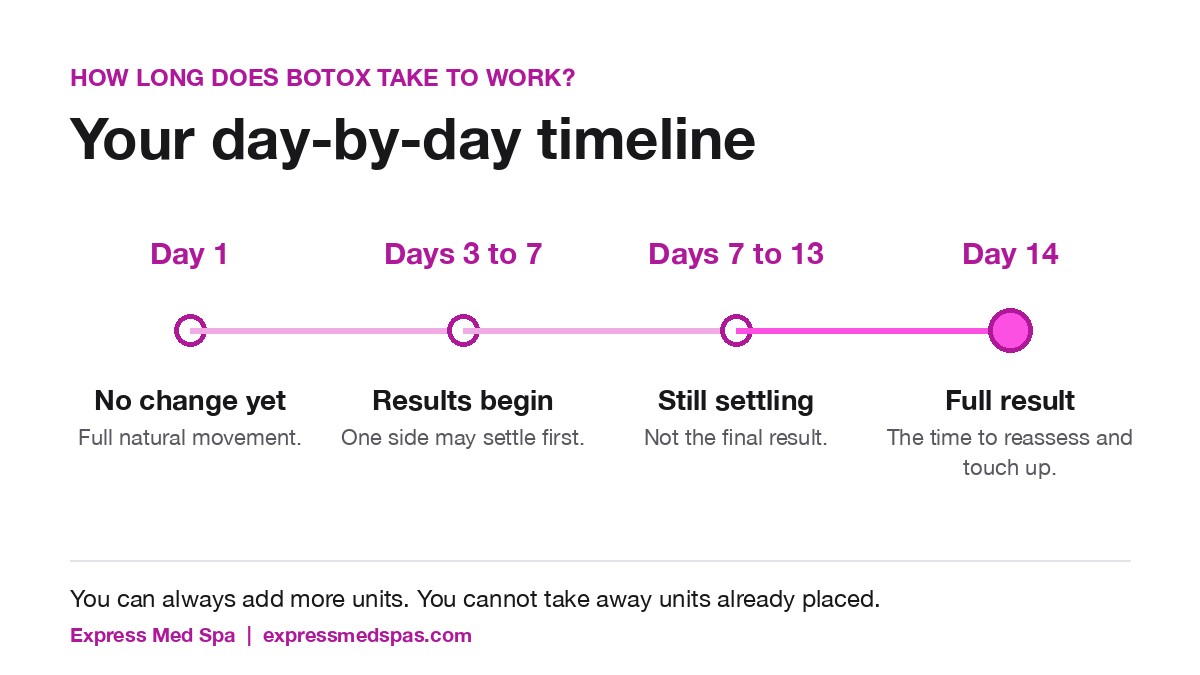
How Long Does Botox Take to Work? A Day-by-Day Timeline
Botox usually starts working within a few days and reaches its full result in about two weeks. Here is the day-by-day timeline, why one…- Nurse Lily Zelaya 10.20.26
Botox Touch-Up at 7 Days? Why We Wait 14 Days (Video)
Thinking about a Botox touch-up at one week? Lily Zelaya, RN, Aesthetic Nurse Injector, explains why Express Med Spa waits for the full 14… - Nurse Jackie Umgelder 09.24.26
GLP-1 vs. Phentermine: Which Weight Loss Medication Fits You?
GLP-1 medications and phentermine work differently, are taken differently, and are screened differently. See how they compare, and how our nurse practitioner team decides… - Nurse Jackie Umgelder 09.24.26
Who Qualifies for Weight Loss Injections? A Free Consult Decides (Video)
Who qualifies for weight loss injections? Watch Jackie Umgelder, Lead Medical Assistant at Express Med Spa, explain how a free consultation with our nurse…  Nurse Stefanie Drozd 09.23.26
When to Start Preventative Botox (Baby Botox): Age, Units, and Pricing
Baby botox starts when lines linger, not on a birthday. Age signs, 30 units for $329, and when a standard dose is the more… Nurse Stefanie Drozd 09.22.26
Microneedling with PRP Cost: Face, Acne Scars, and What You Actually Pay for Results
Microneedling with PRP cost at Express Med Spa is $490 for a full face. Series math for acne scars, vampire facial cost, and when…- Nurse Stefanie Drozd 09.21.26
Botox for TMJ: What It Helps, What It Cannot Fix, and How Many Units You Need
Botox for TMJ can lower clenching force when the masseter is the problem. What it helps, what it cannot fix, typical units, and when… - Nurse Stefanie Drozd 09.19.26
Who Is a Good Candidate for Laser Hair Removal? (Video)
Who is a good candidate for laser hair removal? Watch Express Med Spa esthetician Kaitlin Knapp explain why darker, coarser hair responds and why… - Nurse Stefanie Drozd 09.19.26
Does Laser Hair Removal Work on Blonde, Gray, or Red Hair?
Laser hair removal usually does not work well on blonde, gray, white, or red hair because the laser targets pigment. Here is what to…  Nurse Lily Zelaya 09.18.26
How to Get Rid of Bunny Lines with Xeomin | Quick Nose Wrinkle Fix at Express Med Spa La Grange
Learn how Xeomin can quickly smooth away bunny lines on your nose. Quick nose wrinkle fix at Express Med Spa in La Grange, IL.…