
Botox, Xeomin & Filler FAQs
Facial balancing is an approach to injectable treatment that looks at how your features relate to one another, rather than treating a single feature in isolation. The name causes a lot of confusion, because it sounds like a specific product or a fixed package. It is neither. It is a way of assessing a face, and the plan that comes out of that assessment is different for every patient.
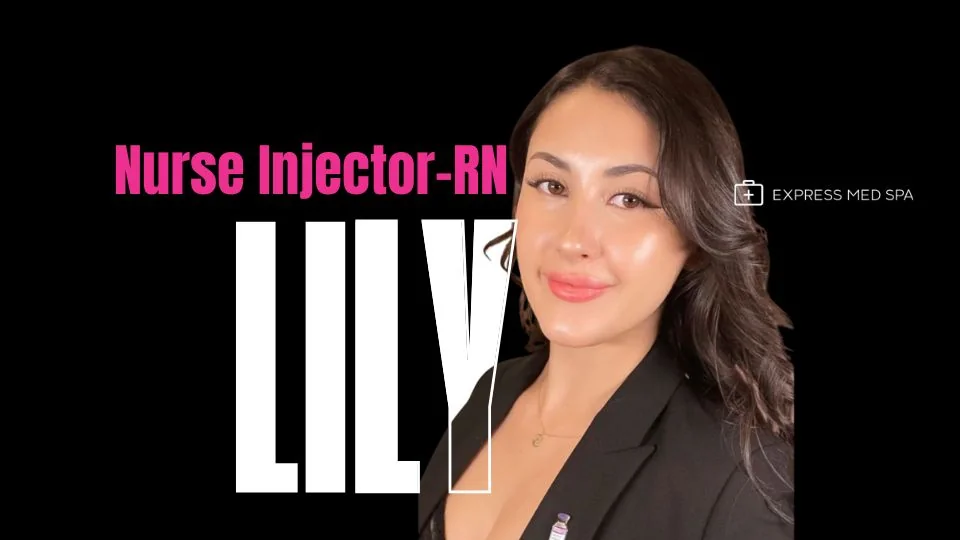
In a short video on what facial balancing actually means, Lily Zelaya, RN, Aesthetic Nurse Injector at Express Med Spa makes the point plainly: facial balancing does not mean putting filler everywhere. This guide expands on that video. It covers what an injector is actually assessing, which areas come up most often, which treatments can be part of a plan, why the right plan sometimes treats a different area than the one you came in asking about, and what to expect on cost and consultation. Individual results vary.
Table of Contents
What Facial Balancing Is
Facial balancing is the practice of assessing the face as a whole and restoring support where it has been lost, so that features work together rather than competing. The goal is not to change your face. As Lily puts it in the video, the goal is to restore support, enhance your natural features, and make everything flow together more harmoniously.
That distinction matters, because it changes what a good outcome looks like. A balanced result is usually one that other people cannot point to. They notice that you look rested or refreshed, not that you had something done in a particular spot. Results vary from person to person, and no injector can promise a specific outcome.
It also means facial balancing is not a single product. Depending on what the assessment finds, a plan may involve hyaluronic acid filler, a collagen stimulating product such as Radiesse, a neuromodulator such as Xeomin or Botox Cosmetic, skin quality treatments, or some combination of these. It may also be staged across more than one appointment.
How an Injector Assesses Your Face
The assessment is the part patients rarely see described, and it is the part that determines everything else. In the video, Lily names three things she is looking at, plus a fourth that ties them together.
Proportion and how features relate
The first question is not “what is wrong with this feature” but “how do these features sit relative to each other”. A chin that reads as small may be perfectly normal in isolation and only look small because the midface above it has lost projection. Treating the chin alone in that situation can miss the actual cause. Looking at proportion first is what prevents that mistake.
Your profile, not just the front view
Most people assess their own face in a mirror, straight on. An injector also looks at you from the side. The side profile is where chin projection, jawline definition, and the relationship between the nose, lips, and chin become visible. A change that is subtle from the front can be significant in profile, which is why chin filler so often comes up in balancing conversations even when the patient did not arrive thinking about their chin.
Where structural support has been lost
Facial aging is not only a surface phenomenon. Volume and structural support are lost over time, and the soft tissue above that lost support has to go somewhere. Much of what patients read as sagging or heaviness in the lower face begins as lost support higher up. Identifying where support went missing is more useful than chasing the place where the result of that loss is most visible.
How each feature flows together
The final consideration is transition. Restoring one area in isolation can create a visible edge between the treated area and the untreated area next to it. A balancing approach asks whether the transitions between regions look continuous, which is often the difference between a result that looks natural and one that does not.
The Areas Most Often Treated
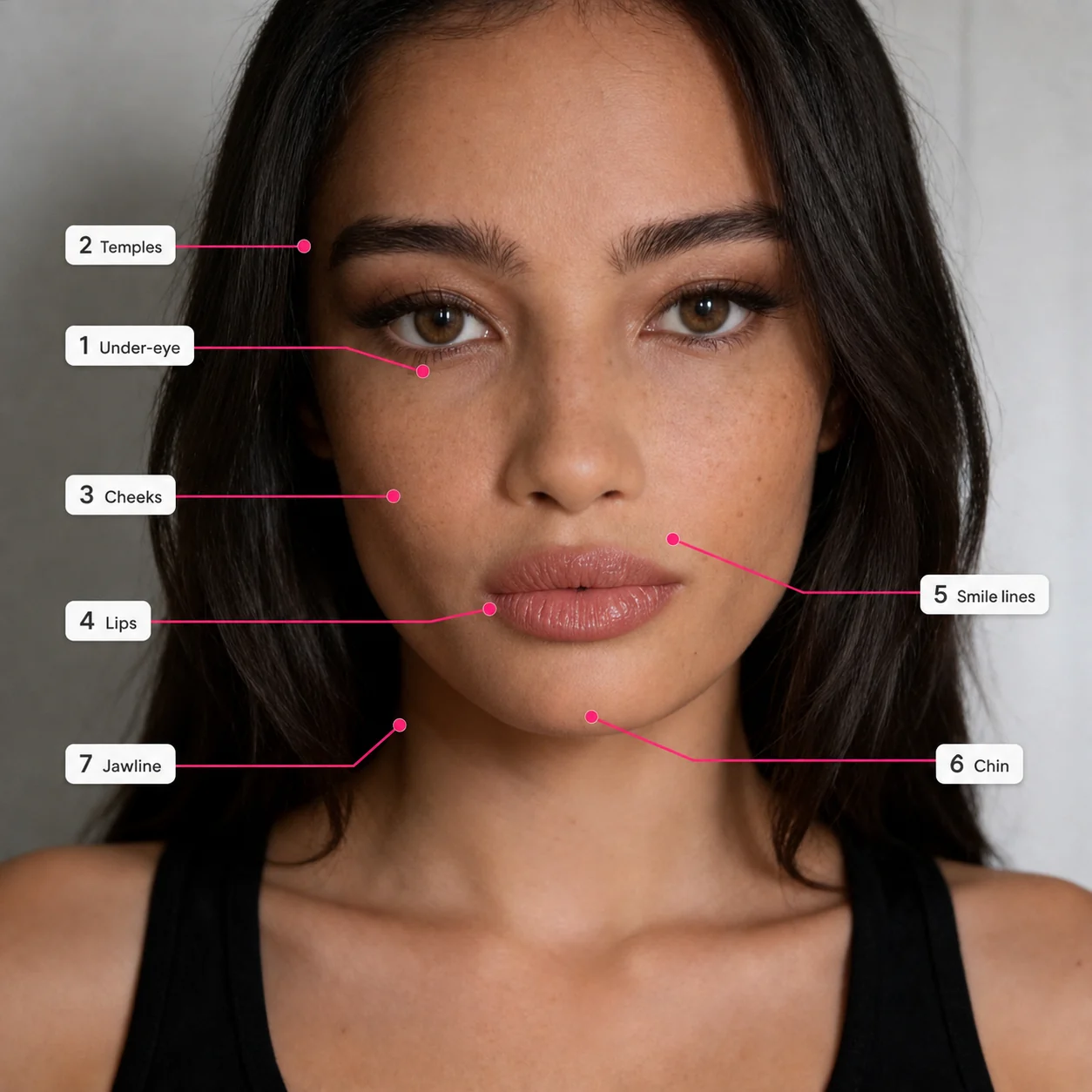
No two plans are identical, but a handful of areas come up repeatedly. Here is what each one contributes and why an injector might raise it.
Cheeks and midface
Cheek filler and midface volumizing is frequently the starting point in a balancing plan, because the midface supports so much of what sits below it. In the video, Lily notes that adding support to the cheek can help create better harmony through the mid and lower face. Patients are often surprised that midface work can soften the appearance of the lower face, but that is the structural relationship at work.
Chin and jawline
Pre-jowl and chin filler addresses projection and definition along the lower border of the face. Adding projection to the chin can help balance a side profile, and it can also improve how the jawline reads from the front. This is one of the clearest examples of an area that photographs very differently from the way patients see themselves in a mirror.
Temples
The temples are the area Lily calls out as the one people most often overlook. As volume is lost in the temples with age, the upper face can start to look hollow or, in her word, skeletonized. Restoring volume there can soften that transition into the brow and cheek and contribute to a more rejuvenated overall appearance. Because the temples sit at the top of the face, work there tends to affect the impression of the whole upper third.
Under eyes
Under eye filler, also called tear trough filler, addresses hollowing beneath the eye. This is a technically demanding area and is not appropriate for everyone. It is also an area where midface support is often assessed first, because cheek support can change how the under eye region reads without treating the under eye directly.
Nose and side profile
Liquid rhinoplasty, a non-surgical nose reshaping with dermal filler, can address a bridge irregularity or asymmetry, and it interacts strongly with chin projection in the side profile. The nose and the chin are frequently assessed together for that reason.
Lines around the mouth and lower face
Nasolabial fold filler, marionette line filler, and perioral line filler address the lower face. These areas are commonly where patients first notice change, but as noted above, they are often not where a balancing plan starts. Support higher in the face is usually assessed before treating these lines directly.
The Treatments That Can Be Part of a Plan
Facial balancing is completely individualized, and the toolkit is broader than filler alone. In the video Lily lists four categories, and they map onto distinct jobs.
Hyaluronic acid filler
Hyaluronic acid fillers such as Belotero and Revanesse add volume and support directly, and take effect immediately. A practical advantage of this category is reversibility: hyaluronic acid filler can be dissolved with an enzyme if needed, which is what a filler dissolving appointment does.
Biostimulators
Radiesse is a collagen stimulating filler. The Express Med Spa treatment page describes it as instantly lifting the jowl, jaw, and cheek line while also building collagen. Biostimulators work on a different timeline than hyaluronic acid, since part of the effect develops as the body responds, and they are often chosen when broad structural support is the goal rather than precise shaping.
Neuromodulators
Botox Cosmetic, Xeomin, and Letybo relax specific muscles rather than adding volume. In a balancing plan they handle the movement component: muscle activity that pulls a feature down or creases the skin in a particular direction. A targeted example is masseter treatment, which addresses the jaw muscle and can affect how the lower face is shaped.
Skin quality treatments
Structure is only part of the picture. Microneedling, IPL photofacial, and radiofrequency skin tightening address texture, tone, and laxity. Lily specifically names lasers and microneedling as options that can be part of a balancing plan, which is a useful reminder that the answer to a facial concern is not automatically an injectable.
Why the Right Plan Sometimes Treats a Different Area
The single most useful line in the video is this one: sometimes you do not need filler in the place you thought you needed filler. This is worth sitting with, because it runs against how most people arrive at a consultation.
Patients typically come in having identified a specific problem area, usually the place where change is most visible to them. But visibility and cause are not the same thing. Heaviness at the jawline may originate as lost midface support. A chin that looks recessed may be a proportion issue rather than a chin issue. Hollowness under the eye may improve with cheek support. In each case, treating the obvious spot can produce a result that looks overfilled locally while leaving the underlying pattern unaddressed.
This is also why facial balancing resists a fixed menu. Two patients presenting with the same complaint can leave with genuinely different plans, and a plan may be staged so that the effect of one area can be assessed before the next is treated. Results vary, and a plan may be revised as it progresses.
What Facial Balancing Costs
Because facial balancing is a plan rather than a single service, there is no one price for it. Cost depends on which areas are treated, which products are used, and how much product is needed, and that is determined at consultation.
What can be quoted is the published pricing for the components. Express Med Spa lists Mini Face Filler starting at $349 per half syringe, priced per half syringe, and the treatment description notes it suits temple volume loss, tear troughs and under eye circles, and deeper lines. Pricing is subject to change and depends on the product and the amount used. The current med spa price menu is the authoritative source, and current specials sometimes bundle balancing components at a package rate.
Consultations at Express Med Spa are complimentary, so getting a plan and a quote does not commit you to treatment. That is the practical way to find out what your own plan would involve and cost.
What Happens at Your Consultation
A balancing consultation is mostly assessment and conversation. Expect the following:
- A discussion of what is bothering you and what you want to look like, in your own words.
- An assessment from the front and in profile, often with photographs for reference.
- A frank explanation of where support has been lost and how the areas relate to each other.
- A proposed plan, which may treat an area you did not expect, and may be staged over more than one visit.
- A cost estimate based on the products and amounts that plan would require.
- Discussion of what is realistic, including what a given plan will not accomplish.
It is reasonable to ask why a particular area is being recommended and what the alternative would be. A good consultation should leave you able to explain the plan back in your own words.
Who Performs Facial Balancing at Express Med Spa
Express Med Spa is nurse practitioner led under Stefanie Drozd, MSN, APRN, founder and Medical Director. Injectable treatments are performed by the practice’s registered nurse injectors and advanced practice providers.
Lily Zelaya, RN, Aesthetic Nurse Injector, who appears in the video above, sees patients at the La Grange location. She is a registered nurse injector whose stated approach values natural, safe, and balanced results, which is the perspective the video reflects. You can see the full team and each provider’s focus areas.
Where to Book
Express Med Spa sees patients at four Chicagoland locations: Frankfort, La Grange, Shorewood, and Chicago Mount Greenwood.
If you want to know what a balancing plan would look like for your face, book a complimentary consultation at the location most convenient for you. You can also watch the short video on what facial balancing actually means for Lily’s explanation in her own words. Individual results vary, and a consultation is the right place to confirm what suits your anatomy and your goals.
Frequently Asked Questions
Does facial balancing mean getting filler everywhere?
No. Facial balancing means assessing the whole face and treating only where support is actually needed. In many plans that is one or two areas. It can also involve neuromodulators or skin treatments rather than filler, and sometimes the area treated is not the one the patient expected.
How much does facial balancing cost?
There is no single price, because the plan differs per patient. Express Med Spa lists Mini Face Filler starting at $349 per half syringe, and pricing is subject to change depending on product and amount used. See the med spa price menu, and get an exact quote at a complimentary consultation.
Which areas are treated most often in facial balancing?
The cheeks and midface, chin and jawline, and temples come up most frequently, because those areas provide structural support for the rest of the face. Under eyes, nose, and the lines around the mouth are also commonly assessed. Which areas apply to you is determined at consultation.
Why do the temples matter for facial balancing?
Volume loss in the temples is easy to overlook because patients rarely look there. As temple volume is lost with age, the upper face can look hollow. Restoring volume there can soften the transition into the brow and cheek and improve how the whole upper face reads. Results vary.
Will facial balancing change how I look?
The intent is the opposite. The goal is to restore lost support and let your natural features work together, not to change your face. A well planned result is typically noticed as looking rested rather than as an obvious treatment. Individual results vary.
Can facial balancing be reversed if I do not like it?
Hyaluronic acid filler can be dissolved with an enzyme, which is what a filler dissolving appointment does. Biostimulators and neuromodulators are not reversible in the same way, though neuromodulator effects fade on their own over time. Discuss reversibility at your consultation.
How many appointments does facial balancing take?
It varies. Some plans are completed in one visit, and others are staged so the effect of one area can be assessed before the next is treated. Staging is common when several areas are involved. Your provider will outline the expected sequence at consultation.
Meet our nurse practitioner-led team.That’s exactly why we offer free consults.
Meet our nurse practitioner-led team.
That’s exactly why we offer free consults.
🧬 Personalized care that fits your goals.

Stefanie Drozd, APRN
Founder & Nurse Practitioner
354
5 Star Average Rating
Five Star Reviews... and growing
Let’s Talk About Your Skin Goals
You don’t have to guess what treatment is right for you. Book a complimentary consultation and let our licensed professionals help you choose the safest and most effective option. We will walk you through your options and help you decide what makes the most sense for your skin, goals, and budget.Express Med Spa Team
Share
Recent Posts
Personalized, Judgment-Free Care
That’s exactly why we offer free consults.
🧬 Just personalized care that fits your goals.
Stefanie Drozd, APRN
Founder & Nurse Practitioner
You don’t have to guess what treatment is right for you. Book a complimentary consultation and let our licensed professionals help you choose the safest and most effective option. We will walk you through your options and help you decide what makes the most sense for your skin, goals, and budget.Express Med Spa Team
354
5 Star Average Rating
Five Star Reviews... and growing
Let’s Talk About Your Skin Goals