
Botox, Xeomin & Filler FAQs
Dermal filler alone is rarely the right fix for facial aging after GLP-1 weight loss. When you lose significant weight, your face loses deep and superficial fat pads while the overlying skin envelope is left with less structural support and reduced elasticity. Adding syringes of hyaluronic acid filler into loose skin without treating skin firmness and collagen density first can weigh the tissue down and look unnatural. A balanced restoration plan combines radiofrequency microneedling for skin quality, Radiesse biostimulation for collagen support, conservative filler only where deep volume is missing, neurotoxin for dynamic expression lines, and daily medical-grade skincare.
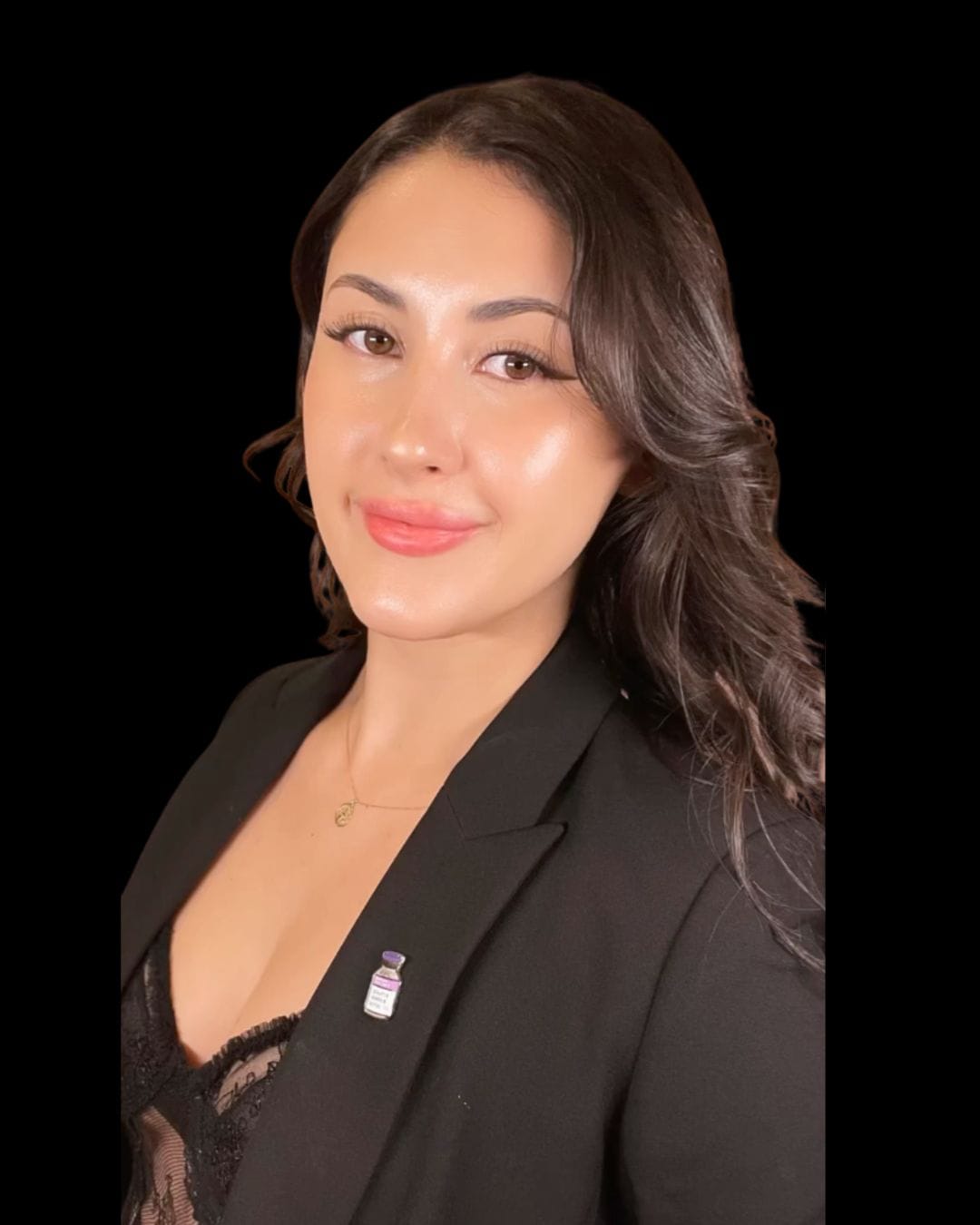
Prefer to watch the quick summary first? In our 63 second video on why filler is not always the fix after weight loss, Lily Zelaya, RN, Aesthetic Nurse Injector at Express Med Spa, walks through how our nursing team sequences skin tightening, collagen builders, and injectables. This companion guide breaks down the anatomy behind post-weight-loss facial changes, how each treatment works, what to treat first, and what published pricing looks like across our Illinois clinics.
Table of Contents
Why Your Face Can Look Older After Losing Weight on a GLP-1
Patients on a GLP-1 medical weight loss program often tell us the same thing at consultation: they feel healthier and lighter in their clothes, but their reflection in the mirror looks tired, hollow, or older than before. That contrast is not imagined, and it is not a side effect unique to one medication. It is a mechanical consequence of how the face stores fat and how skin adapts when volume drops quickly.
Anatomical research shows that youthful facial contours depend on discrete superficial and deep fat compartments separated by fibrous septa (Rohrich and Pessa, Plastic and Reconstructive Surgery, 2007). These compartments act like structural pillows underneath the skin, holding up the midface, softening the transition between the lower eyelid and cheek, and keeping the jawline taut. When you lose body fat across a period of months, the body draws energy from facial fat pads at the same time it draws from the waist, hips, and limbs (Cotofana et al., Facial Plastic Surgery, 2019).
- Hollowing in the midface and temples: deflation of the deep medial cheek fat and temporal fat pads flattens the front of the cheek and leaves shadows under the cheekbones.
- Skin laxity and looser texture: skin that was stretched over fuller fat pads does not always retract at the same pace as rapid weight loss, especially after age 35 when natural collagen and elastin turnover slows.
- Deeper nasolabial folds and marionette lines: as midface support drops, the superficial cheek tissue settles downward against the fixed ligaments around the nose and mouth.
- More visible fine lines and dynamic wrinkles: with less subcutaneous padding beneath the dermis, every crease from smiling, squinting, or frowning etches more sharply into the surface.
Our foundational guide on facial volume loss covers how these compartments shift gradually over decades. During medical weight loss, that same structural shift happens in a fraction of the time, giving the skin far less opportunity to remodel on its own.
Why Rushing Straight to Dermal Filler Can Backfire
When you notice hollow cheeks or deeper smile lines in the mirror, the most common instinct is to ask for dermal filler to plump the area back up. Hyaluronic acid filler is an important tool in aesthetic medicine, and in the right anatomical plane it restores structural support well. The problem happens when filler is asked to do the job of skin tightening and collagen regeneration at the same time.
Think of the facial skin envelope like a tailored jacket and the fat compartments underneath like the lining. After weight loss, the lining is thinner and the outer fabric is slightly stretched. Trying to pull stretched fabric tight solely by stuffing more lining inside requires far too much volume. In the face, attempting to lift loose skin by injecting extra syringes of hyaluronic acid gel can create a heavy, puffy, or wide appearance in the lower cheeks and jawline rather than a rested contour.
- Volume loss versus skin laxity are separate problems: hyaluronic acid filler replaces localized deep volume, but it does not tighten loose surface skin or resurface crepey texture.
- Excess gel adds weight to lax tissue: placing hydrophilic (water-attracting) filler into superficial areas with weak dermal support can accentuate heaviness along the jowls or nasolabial folds.
- Skin quality sets the ceiling on injectable results: even well-placed cheek or chin support looks more natural when the overlying dermis is firm, hydrated, and rich in native collagen.
As Lily Zelaya, RN emphasizes in the video, knowing what to treat and when to treat it protects your natural proportions. Our facial balancing guide explains how injectors evaluate the whole face rather than chasing a single fold.
The Five-Part Toolkit for Post-Weight-Loss Facial Rejuvenation
Instead of relying on a single syringe to solve three different tissue changes, a nurse-practitioner-led treatment plan matches each layer of the face to the modality built for it:
- 1. Radiofrequency microneedling for skin quality, firmness, and texture: delivers controlled thermal energy into the dermis to contract existing collagen fibers and trigger new collagen and elastin remodeling (El-Domyati et al., Journal of the American Academy of Dermatology, 2011).
- 2. Radiesse for collagen biostimulation and structural support: uses calcium hydroxylapatite microspheres to provide immediate structural scaffolding while stimulating your fibroblasts to lay down new type I and type III collagen over months (Yutskovskaya et al., Journal of Drugs in Dermatology, 2014).
- 3. Strategically placed hyaluronic acid filler for targeted volume restoration: replaces deep structural pillow support in specific zones such as the midface, temples, or chin once tissue support is addressed.
- 4. Botox or neurotoxin to soften dynamic expression lines: relaxes the hyperactive muscles that crease thinner skin across the forehead, glabella, and crow’s feet.
- 5. Daily medical-grade skincare for barrier and collagen maintenance: protects new collagen from ultraviolet breakdown and supports cellular turnover between office visits (American Academy of Dermatology).
Step 1: Radiofrequency Microneedling for Skin Quality and Firmness
When rapid weight loss leaves the skin feeling softer, thinner, or slightly crepey along the cheeks, lower face, or neck, surface tightness needs attention first. At Express Med Spa, our Sublative radiofrequency microneedling treatment on the FDA-cleared Candela elos Plus platform uses fractionated bi-polar radiofrequency energy to heat the dermis while keeping the outer epidermis largely intact (Hruza et al., Lasers in Surgery and Medicine, 2009).
Histologic studies of radiofrequency dermal heating demonstrate two distinct phases of improvement: an initial contraction of existing collagen bundles followed by a multi-month wound-healing cascade in which fibroblasts synthesize fresh collagen and elastin fibers (El-Domyati et al., Journal of the American Academy of Dermatology, 2011). In practical terms, that means the skin envelope gradually becomes firmer, denser, and smoother in texture without adding artificial bulk.
- Best for: mild to moderate skin laxity, crepey cheek or neck texture, enlarged pores, and fine surface lines after weight loss.
- How it fits the sequence: improving dermal thickness and elasticity gives your skin better snap and resilience, which often reduces the amount of injectable filler needed later.
- What to expect: most patients complete a series of sessions spaced several weeks apart, as collagen remodeling builds progressively over 3 to 6 months. Individual results vary.
Step 2: Radiesse for Collagen Stimulation and Facial Support
Where weight loss has thinned both the dermal scaffolding and the structural support along the midface, lower cheeks, jawline, or neck, Radiesse bridges the gap between skin tightening and traditional volumizing filler. Radiesse is composed of smooth calcium hydroxylapatite (CaHA) microspheres suspended in a water-based carboxymethylcellulose gel carrier (Berlin et al., Dermatologic Surgery, 2008).
Once placed by your injector, the carrier gel provides gentle, immediate structural support while the CaHA microspheres act as a scaffold that recruits your body’s own fibroblasts. Split-face immunohistochemical studies confirm that CaHA stimulates new type I and type III collagen as well as elastin and angiogenesis over the following months, even as the microspheres themselves are gradually metabolized by the body (Yutskovskaya et al., Journal of Drugs in Dermatology, 2014).
- Structural placement: placed deeper along bone or firm tissue planes in the cheeks, pre-jowl sulcus, or jawline, Radiesse restores crisp contour with higher lift capacity and without attracting excess water.
- Hyperdilute biostimulation: when thinned with sterile saline and lidocaine, hyperdilute Radiesse can be fanned more superficially across the mid-to-lower cheeks, neck, or decolletage to thicken thin, lax skin and improve firmness rather than add projection.
- Learn more: read our detailed guide on how Radiesse works and its benefits and our comparison of Radiesse vs. Sculptra.
Step 3: Strategically Placed Hyaluronic Acid Filler for Deep Volume
Once skin quality and collagen scaffolding are accounted for, targeted hyaluronic acid (HA) filler does what it does best: replacing discrete pockets of lost deep fat. Rather than chasing every surface crease, an experienced nurse injector places conservative amounts of HA filler at the structural foundation so the face looks rested and proportional.
At Express Med Spa, we use smooth hyaluronic acid gels including Revanesse Versa+ and Belotero Balance across specific anatomical zones:
- Lateral and deep midface support: cheek filler and midface volumizing restores the deep cheek pillow that deflated during weight loss, subtly supporting the under-eye transition and softening the fold below.
- Chin and pre-jowl refinement: pre-jowl and chin filler restores lower-face continuity when weight loss leaves a shadow beside the chin.
- Softening residual folds: if nasolabial folds or marionette lines remain noticeable after midface support and collagen stimulation, small amounts of flexible HA gel can cushion the crease without overfilling.
Because hyaluronic acid is reversible with hyaluronidase and can be layered gradually over multiple visits, taking a conservative, step-by-step approach prevents the overdone look many patients worry about.
Step 4: Botox and Neurotoxins to Soften Expression Lines
Losing subcutaneous facial fat changes how dynamic wrinkles behave. When you had fuller cheeks and temples, a thicker cushion of tissue sat between your facial muscles and the surface skin. After weight loss, the skin sits closer to the underlying muscle fibers, so everyday expressions like squinting, smiling, or concentrating fold the skin more sharply.
Neuromodulators such as Botox Cosmetic, Xeomin, and Letybo temporarily relax the targeted muscle contractions that fold the skin, allowing the overlying dermis to lie smoother at rest. If you are not sure which lines come from muscle movement versus volume loss, our guide to dynamic vs. static wrinkles walks through how we tell them apart during an exam.
Step 5: Daily Skincare That Protects Collagen and Skin Quality
In the video, Lily notes that she recommends a targeted skincare routine for everybody on a weight loss journey. In-office procedures like radiofrequency microneedling and Radiesse send the signal to build new collagen, but your daily home routine determines how well your skin maintains that investment between appointments.
The American Academy of Dermatology emphasizes that daily broad-spectrum sunscreen (SPF 30 or higher) and consistent moisturization are foundational for protecting existing collagen and visibly plumping fine dehydration lines. Depending on your skin sensitivity and treatment schedule, your provider may also recommend topical antioxidants such as vitamin C, peptides, or a retinoid to support epidermal turnover and dermal collagen synthesis.
Timing Your Plan: Should You Treat During or After Weight Loss?
One of the most helpful parts of a consultation is mapping out when to start each step while your weight is still changing:
- While you are actively losing weight: focus on skin quality, collagen stimulation, and muscle relaxation. Starting medical-grade skincare, neurotoxin (Botox or Xeomin), and collagen-building treatments like Sublative radiofrequency microneedling or hyperdilute Radiesse while you are losing weight supports the skin envelope as your contours change.
- As you approach or reach your goal weight: evaluate deep volume placement. Waiting until your weight is closer to stable before placing larger structural hyaluronic acid filler ensures your injector is balancing your settled facial proportions rather than a moving target.
- If you have already reached your goal weight: we still recommend starting with or pairing skin firmness and collagen support alongside conservative filler so the skin and underlying support improve together.
Published Pricing at Express Med Spa
Because every face loses volume and elasticity at a different rate, your exact sequence is customized at consultation. Published starting prices across our menu include:
- Sublative RF Microneedling: starting at $495 per session (face or one body area).
- Radiesse Collagen-Stimulating Filler: starting at $699 per syringe (hyperdilute neck or decolletage rejuvenation packages of 2 syringes are $1,300).
- Neurotoxin (Botox): starting at $10.95 per unit for first-time clients or return visits within 3 to 4 months, and $12.95 per unit for return visits over 4 months.
- Hyaluronic Acid Dermal Fillers (Revanesse Versa+, Belotero Balance): per-syringe pricing is reviewed during your consultation based on the specific areas and number of syringes recommended.
All prices are subject to change, and your personalized treatment plan and exact total are confirmed with our clinical staff during your consultation before any service begins. CareCredit and Cherry financing options are available.
Visit Express Med Spa in Frankfort, La Grange, Shorewood, or Mount Greenwood
Express Med Spa is a nurse-practitioner-led practice founded by Stefanie Drozd, MSN-APRN, Founder and Lead Nurse Practitioner. You can schedule a facial rejuvenation or medical weight loss consultation with Lily Zelaya, RN, Aesthetic Nurse Injector and our clinical team across our Illinois medical spa locations in Frankfort, La Grange, Shorewood, and Chicago Mount Greenwood.
Frequently Asked Questions
Why does my face look older or gaunt after losing weight on a GLP-1?
Significant weight loss reduces fat across the whole body, including the deep and superficial fat pads that support the cheeks, temples, and jawline. When those fat pads shrink faster than the overlying skin can retract, the cheeks can look hollow, the skin appears looser, and expression lines become more noticeable.
Is dermal filler the best fix for facial volume loss after weight loss?
Not by itself. While strategically placed hyaluronic acid filler can restore lost deep volume, relying on filler alone to lift loose skin often requires too much product and can look heavy or puffy. Combining skin-tightening treatments like radiofrequency microneedling and collagen biostimulators like Radiesse with conservative filler produces a more natural result.
How does radiofrequency microneedling help after weight loss?
Radiofrequency microneedling delivers controlled thermal energy into the dermis to contract existing collagen fibers and stimulate fresh collagen and elastin production over the following months. This helps improve skin firmness, elasticity, and surface texture without adding volume.
What is the difference between Radiesse and hyaluronic acid filler for weight-loss facial changes?
Hyaluronic acid fillers (such as Revanesse Versa+) use a soft gel to replace volume in a specific pocket right away. Radiesse uses calcium hydroxylapatite microspheres that provide structural support while stimulating your own fibroblasts to build new type I and type III collagen and elastin over several months, helping thicken and firm lax tissue.
Should I wait until I reach my goal weight before starting facial treatments?
You do not need to wait to support your skin quality. Starting medical-grade skincare, neurotoxin (Botox or Xeomin) for expression lines, and collagen-stimulating treatments like radiofrequency microneedling or Radiesse during active weight loss helps support your skin envelope as you slim down. Larger structural filler placement is often timed as your weight stabilizes.
Where does Botox fit into a post-weight-loss facial plan?
When facial fat pads thin out, there is less cushioning between your facial muscles and the skin surface, making dynamic lines on the forehead, between the brows, and around the eyes look deeper. Botox softens those muscle contractions so expression lines look smoother.
How much do RF microneedling, Radiesse, and Botox cost at Express Med Spa?
At Express Med Spa, Sublative RF microneedling starts at $495 per session, Radiesse starts at $699 per syringe, and neurotoxin starts at $10.95 per unit for first-time clients or return visits within 3 to 4 months ($12.95 per unit for return visits over 4 months). Prices are subject to change, and your exact plan is confirmed during a free consultation.
How do I know which treatment my face needs first?
A consultation with our nursing team evaluates whether your primary change is skin laxity, collagen thinning, deep fat pad deflation, or dynamic muscle lines. From there, we map out a step-by-step sequence tailored to your anatomy, timeline, and budget.
Book a Facial Balancing Consultation at Express Med Spa
Ready for an honest, pressure-free plan that treats both skin quality and natural facial support? Call 877-363-3772 or book your consultation online at our Frankfort, La Grange, Shorewood, or Mount Greenwood clinics.
This article is for educational purposes and explains how anatomical fat compartments and skin elasticity respond to weight loss, grounded in peer-reviewed dermatology and plastic surgery literature linked above. Individual results vary based on anatomy, skin quality, age, and treatment plan. Nothing on this page is medical advice or a substitute for an in-person clinical consultation.
Meet our nurse practitioner-led team.That’s exactly why we offer free consults.
Meet our nurse practitioner-led team.
That’s exactly why we offer free consults.
🧬 Personalized care that fits your goals.

Stefanie Drozd, APRN
Founder & Nurse Practitioner
354
5 Star Average Rating
Five Star Reviews... and growing
Let’s Talk About Your Skin Goals
You don’t have to guess what treatment is right for you. Book a complimentary consultation and let our licensed professionals help you choose the safest and most effective option. We will walk you through your options and help you decide what makes the most sense for your skin, goals, and budget.Express Med Spa Team
Share
Recent Posts

Personalized, Judgment-Free Care
That’s exactly why we offer free consults.
🧬 Just personalized care that fits your goals.
Stefanie Drozd, APRN
Founder & Nurse Practitioner
You don’t have to guess what treatment is right for you. Book a complimentary consultation and let our licensed professionals help you choose the safest and most effective option. We will walk you through your options and help you decide what makes the most sense for your skin, goals, and budget.Express Med Spa Team
354
5 Star Average Rating
Five Star Reviews... and growing
Let’s Talk About Your Skin Goals