

Botox, Xeomin & Filler FAQs
Facial volume loss is one of the most common reasons people start to feel that their face looks tired, heavier, or different from how they remember it. You may catch a shadow under your eyes in the morning mirror, notice deeper lines beside your mouth, or feel like the lower face is softening into your jaw. These changes can feel like separate problems, but they almost always share the same root cause. This guide walks through what is actually happening beneath the skin, the three areas people notice first, and the options that may help. Results vary from person to person.
In a short video about Facial volume loss, Lily Zelaya, RN, our aesthetic nurse injector in La Grange, breaks down the three areas clients come in most frustrated about, and what is actually going on with each one.
Table of Contents
What Facial Volume Loss Actually Is
A youthful face is supported from underneath by several layers working together: fat pads beneath the skin, bone in the cheeks and jaw, collagen and elastin in the skin itself, and the muscles and ligaments that anchor everything in place. With age, all of those layers change at once. The result is a face that can look flatter in some places and heavier in others, even when your weight has not changed.
The Four Layers That Lose Support
Fat pads. The deep fat compartments in the cheeks, temples, and around the eyes can shrink and shift downward. This creates hollows where the face used to look full, and bunches volume where skin used to look smooth.
Bone. The bones of the mid face and jaw slowly remodel with age. The upper cheekbone loses projection, the eye sockets widen slightly, and the jawline can become less defined. Less bone support means less structure for the soft tissues above.
Collagen and elastin. Skin loses roughly 1 percent of its collagen each year after age 20, and the loss speeds up around perimenopause. As collagen drops, skin loses firmness, bounce, and the ability to spring back into shape.
Muscle and ligaments. Facial ligaments that hold tissue in place stretch over time, allowing things to drift downward. Some muscles also pull more strongly than others, which can deepen certain folds.
When Does Volume Loss Begin?
Volume loss is gradual, not sudden. Most people see early signs in their 30s: a flattening of the under-eye area, a softening of the cheekbone, or a faint shadow at the corner of the mouth. By the 40s and into perimenopause, hormonal changes can speed up collagen loss and fat redistribution, which is when many clients first book a consultation. The 50s and 60s often bring more visible changes in the jawline and lower face. There is no right age to start. What matters is treating what is happening for you, in the areas where you notice it most.
The Three Areas Clients Ask About Most
In the video above, Lily walks through the three concerns she hears most often. Here is each one with a closer look at what is happening and what may help.
1. Under-Eye Hollows
That sunken, shadowy look under the eyes is not always about sleep. The fat pad beneath each eye can deflate or slip downward with age. As it loses volume, light no longer reflects evenly across the lower eyelid, and a darker, hollow appearance settles in. Many clients describe it as constantly looking tired even when they feel rested.
Carefully placed hyaluronic acid filler in the tear-trough area may soften the shadow by restoring lost volume and creating a smoother contour between the lower eyelid and the cheek. Because the under-eye is delicate and the wrong product can pool or look bluish, this area is best handled by an experienced injector after an in-person assessment. You can read more about Belotero under the eyes and our Belotero dermal filler options.
2. Nasolabial Folds
Nasolabial folds run from the corner of the nose to the corner of the mouth. Clients often come in pointing right at the fold itself, but the change driving it usually sits higher up. As the cheek and mid face lose volume and bone support, the tissues above the fold settle downward and gather where the cheek meets the upper lip. Filling the fold itself can give a heavy or unnatural look. Restoring support in the cheek and mid face may soften the fold from above without overfilling the line.
A collagen-stimulating filler like Radiesse may help rebuild mid-face structure gradually over months. If you are comparing options, see our guides to Radiesse vs. Juvederm, how Radiesse works, and Radiesse vs. other fillers.
3. Jowls Along the Jawline
Jowls form when skin and tissue at the lower face lose elasticity and slide forward over the jaw, breaking the once-clean line from chin to ear. Some people see a soft pouch beside the chin, others feel the lower face looks heavier or more square. Clients often describe it as looking older or weighed down in the lower third of the face.
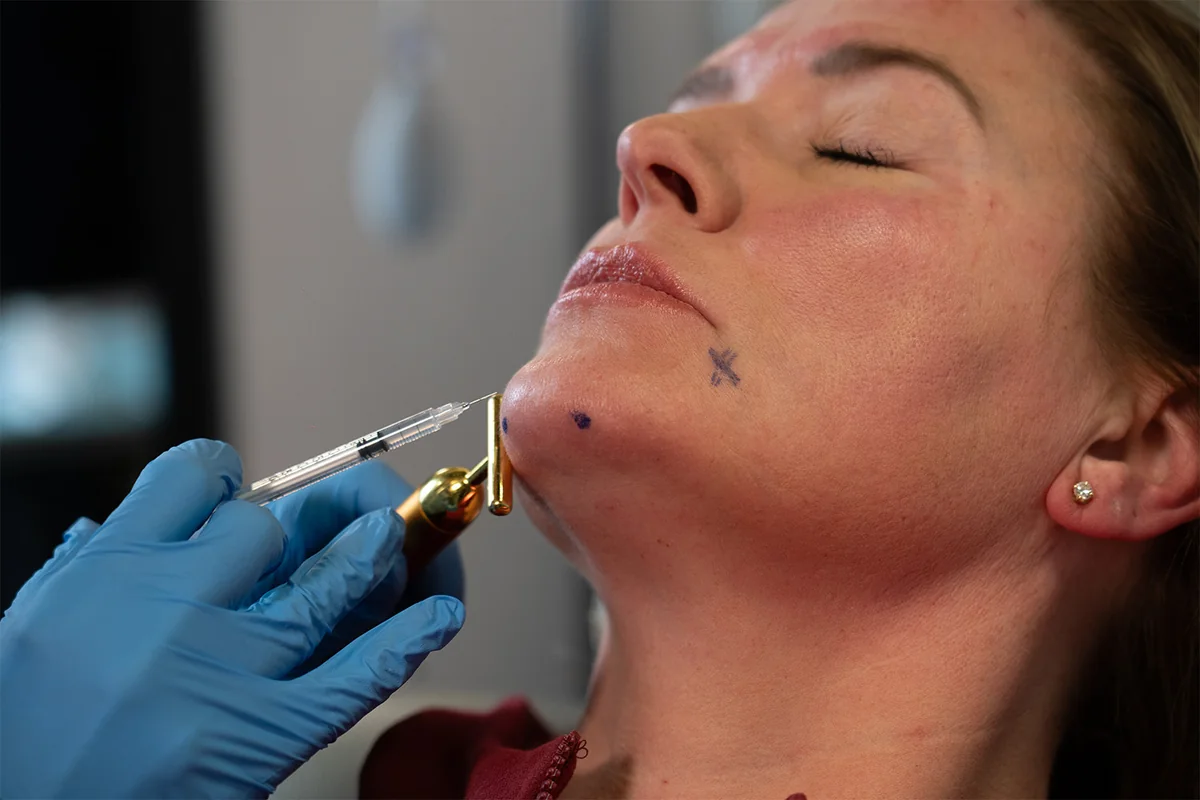
Because jowls involve both volume loss and skin laxity, treating only one piece often falls short. A well-built plan may use filler to restore structure at the chin and along the jawline, paired with skin-tightening or lifting options like a PDO thread lift or sublative RF microneedling to firm the skin itself. Where the jaw appears wider because of an overactive masseter muscle, Xeomin for jawline slimming may help soften the angle.
“All of these come down to volume loss and loss of skin laxity. The good news is that they are treatable.” Lily Zelaya, RN
Why Treating One Area Alone Often Falls Short
Because volume loss and skin laxity travel together, chasing one line or one shadow at a time can leave the face looking off-balance. A more natural result usually comes from a plan that steps back and reads the whole face: where support has dropped, where skin needs firming, where muscle pull is creating creases, and what should be preserved. That is the value of a consultation with a nurse practitioner-led team. Express Med Spa is a women-owned, nurse practitioner-led medical spa founded by Stefanie Drozd, MSN-APRN, and every treatment plan is mapped to your face rather than a fixed menu.

Filler Options for Volume Restoration
Different fillers do different jobs. Here is a brief look at the main categories used for volume loss.
Hyaluronic Acid Fillers
Hyaluronic acid (HA) fillers are made from a sugar that occurs naturally in the body. They add volume right away, hold water in the tissue, and can be dissolved if needed. Products in the HA family work in different areas of the face: some are softer for delicate spots like the lips and under-eye, others are firmer for the cheek or chin. HA fillers tend to last from about 9 months to 18 months depending on the product and the area treated. Versa lip filler is one example.
Collagen-Stimulating Filler (Radiesse)
Radiesse is made of calcium hydroxylapatite microspheres in a gel carrier. It adds volume right away, but its real value is the collagen response it triggers in the months that follow. Results may build gradually and tend to last longer than many HA fillers, often 12 to 18 months or more. Radiesse is often used for the mid face, jawline, and hands.
Specialty Fillers for Delicate Areas
Belotero is a softer HA filler designed to blend smoothly into very superficial layers of the skin. That makes it a common choice for fine lines and the under-eye area, where a thicker filler could create a bluish (Tyndall) effect.
What to Expect at Your Consultation
A first consultation usually runs about 30 to 45 minutes. Your injector reviews your medical history, asks what bothers you most, and looks at your face in motion as well as at rest. From there, you talk through the areas where filler might help, where it would not, and what realistic results may look like for your face. You leave with a plan and a quote, not pressure to book the same day. If you are ready to move forward, the actual treatment is usually scheduled separately and typically takes 30 to 60 minutes depending on the areas treated.
Recovery and Aftercare
Filler is a comfortable, in-office treatment. Most clients return to normal activities the same day. Mild swelling, redness, or small pinpoint bruising in the injected areas is common for a few days. Your injector will give you written aftercare and may suggest avoiding alcohol, intense exercise, and very hot environments for 24 to 48 hours. Final results usually settle within two weeks as any swelling resolves. Individual healing varies.
How Long Do Results Last?
How long filler lasts depends on the product, the area treated, and individual factors like metabolism and how much you move the treated area. As a general guide, hyaluronic acid lip filler often lasts 9 to 12 months, HA fillers in less mobile areas like the cheeks can last 12 to 18 months, and Radiesse can last 12 to 18 months or longer. Results vary.
Pricing
Dermal fillers at Express Med Spa start at $599 per syringe. The number of syringes and your total are confirmed during your consultation, since this depends on the areas treated and your goals.
Meet Your Injector
Lily Zelaya, RN, is the aesthetic nurse injector at Express Med Spa in La Grange, across from the La Grange Metra station. Lily focuses on natural-looking outcomes that work with your facial anatomy, which is the approach you see in the short above. Xeomin, Botox, and Letybo are also offered alongside fillers for clients addressing both wrinkles and volume loss in the same plan.
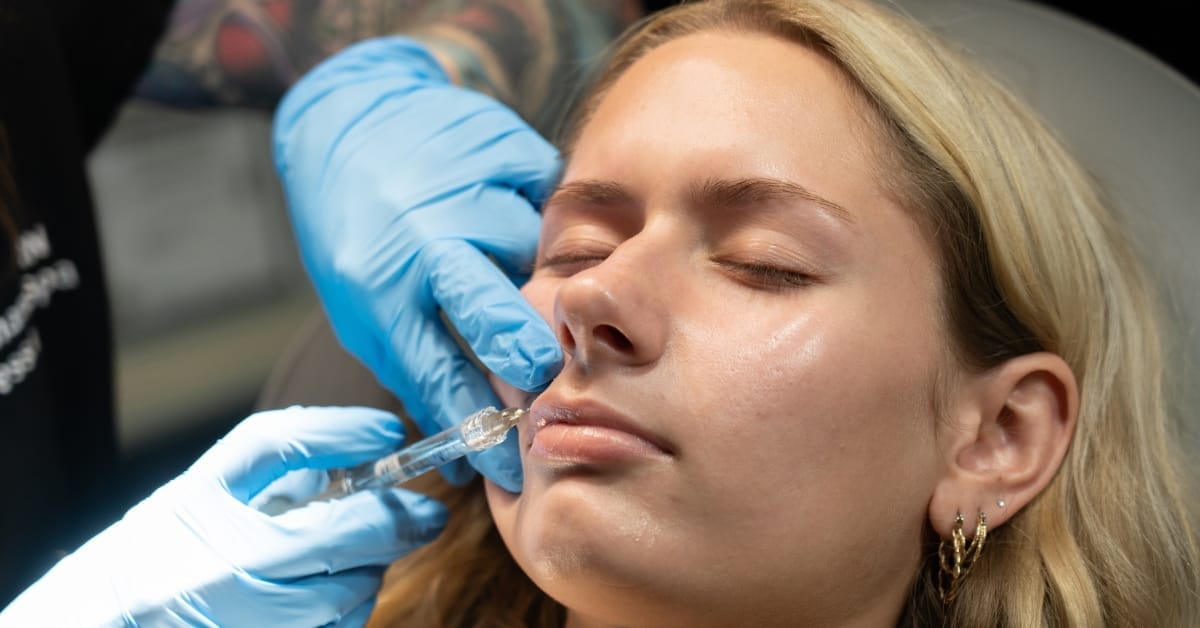
Express Med Spa Locations
Injectable and anti-aging treatments are available at our clinics in Frankfort, La Grange, Shorewood, and Mount Greenwood in Chicago. You can book at the location nearest you.Book a Consultation Online
Frequently Asked Questions
At what age does facial volume loss usually start?
Most people see the earliest signs of facial volume loss in their 30s, with changes accelerating around perimenopause as collagen and fat redistribute. There is no single right age to start treatment. What matters is what you see in your own face and what bothers you most when you look in the mirror. Can fillers be combined with other treatments for facial volume loss?
Yes. Because volume loss and skin laxity often happen together, a well-built plan may pair filler with skin-tightening options like PDO threads or RF microneedling, and with neurotoxins like Xeomin where muscle pull is creating creases. Your injector reviews what fits your face at consultation. Are dermal fillers reversible?
Hyaluronic acid fillers can be dissolved with an enzyme called hyaluronidase if needed. Collagen-stimulating fillers like Radiesse work differently and are generally not dissolved the same way, so product choice matters. Your injector will walk through the differences before treatment. What is the difference between Xeomin (or Botox) and dermal fillers?
Xeomin, Botox, and Letybo are neurotoxins that relax specific muscles to soften lines created by movement, such as forehead lines or crow’s feet. Dermal fillers add volume back to areas that have lost support, such as the cheeks, under-eyes, or jawline. They address different problems and are often used together in the same plan. How many syringes will I need?
The number of syringes depends on the areas treated and how much volume has been lost. Some clients start with one syringe to address a single area, others may use two or more across the cheeks, mid face, and jawline. Your injector will recommend a starting point at consultation, and many people build their plan over multiple visits. Does dermal filler hurt?
Most fillers contain a small amount of numbing medication, and a topical anesthetic can be applied before treatment. Most clients describe the feeling as a pinch or pressure rather than sharp pain. Comfort varies by area, with the lips often more sensitive than the cheeks.
Video Transcript
We are so lucky to live in a time where these three things are treatable. Let’s talk about the top three areas clients come to me most frustrated about, and what is actually going on.
Number one would be under-eye hollowness, that sunken, shadowy look under the eyes. It’s not just tiredness, it’s also volume loss. The fat pads beneath the eye deflate as we age, creating that dark, hollow appearance. It’s very frustrating because it makes people look exhausted when they are not.
Number two, nasolabial folds, those lines that run from the corner of the nose to the corner of the mouth. When the volume in the mid face drops and goes downwards, it creates this nasolabial fold. For some people it gets very deep. Clients come in pointing at this line, but usually the issue resides above it, due to that maxilla bone changing with the aging process.
And number three, jowls, our lovely favorite jowls, that occur right here along the mandible. As the skin and the tissue along the jawline loses its elasticity and support, it starts to sag or hypertrophy along the jawline. Clients describe it as looking heavier or even older in the lower face.
Here’s the thing: all of these come down to volume loss and loss of skin laxity. The good news is that they are treatable. If any of these sound familiar to you, drop a comment down below and let’s talk about what’s possible for you.
Have questions about your own face? Call (877) 363-3772, book online, or contact us here.
Meet our nurse practitioner-led team.That’s exactly why we offer free consults.
Meet our nurse practitioner-led team.
That’s exactly why we offer free consults.
🧬 Personalized care that fits your goals.

Stefanie Drozd, APRN
Founder & Nurse Practitioner
354
5 Star Average Rating
Five Star Reviews... and growing
Let’s Talk About Your Skin Goals
You don’t have to guess what treatment is right for you. Book a complimentary consultation and let our licensed professionals help you choose the safest and most effective option. We will walk you through your options and help you decide what makes the most sense for your skin, goals, and budget.Express Med Spa Team
Share

Personalized, Judgment-Free Care
That’s exactly why we offer free consults.
🧬 Just personalized care that fits your goals.
Stefanie Drozd, APRN
Founder & Nurse Practitioner
You don’t have to guess what treatment is right for you. Book a complimentary consultation and let our licensed professionals help you choose the safest and most effective option. We will walk you through your options and help you decide what makes the most sense for your skin, goals, and budget.Express Med Spa Team
354
5 Star Average Rating
Five Star Reviews... and growing
Let’s Talk About Your Skin Goals