

Injectables & Anti-Aging Treatments
Platysmal Band Treatment: Causes, Botox Units, Cost, and Alternatives
Lily Zelaya
May 2, 2026
Platysmal bands are the vertical cords that run down the front of the neck and pull the lower face downward. They are one of the earliest structural changes people notice in the mirror, and they often show up while the rest of the face still looks rested. Because the cords are produced by a muscle rather than by loose skin, a large share of them respond to a nonsurgical treatment that takes about 15 minutes.
This guide covers what platysmal bands are, how neurotoxin softens them, how many units a treatment usually takes, what it costs, how it relates to the Nefertiti lift, and when injections are honestly not the right answer.
In a short video on platysmal band treatment, the Express Med Spa nurse-practitioner team explains how the bands form and how precise injections relax the platysma muscle to soften the neck and subtly lift the lower face. The video page carries the full transcript.
Table of Contents
Table of Contents
Platysmal Band Treatment: What It Is and How It Works
Platysmal band treatment is a nonsurgical injection procedure that relaxes the platysma muscle so the vertical cords on the neck soften and pull less on the lower face. At Express Med Spa it is performed with Botox or Xeomin by licensed nurse practitioners, takes about 15 minutes, and requires no downtime. Results typically last 3 to 4 months.
The mechanism is straightforward. Botulinum toxin type A temporarily blocks the nerve signal that tells a muscle to contract. Applied to the platysma, that reduces the muscle’s downward pull, so the visible cords flatten and the jawline reads slightly cleaner. Nothing is cut, removed, or tightened. The muscle simply stops working as hard for a few months.
Because the effect is muscular, the treatment works best on bands you can make more prominent by clenching your neck, and less well on skin that has lost elasticity. That distinction drives almost every decision below, and a consultation is where it gets settled.
What Are Platysmal Bands, Exactly?
Platysmal bands are the visible edges of the platysma muscle. The platysma is a broad, thin sheet of muscle that begins in the fascia over the upper chest and shoulder region, runs up the front and sides of the neck, and attaches near the lower jaw and the corner of the mouth. It is unusual among muscles in that it sits directly beneath the skin rather than deep in tissue, which is why its edges become visible so readily.
Functionally the platysma is a depressor. It pulls the lower face and the corners of the mouth downward, and it works alongside the depressor anguli oris in that motion. With age the muscle typically thickens, shortens, and separates in the midline, so instead of lying flat it stands up as distinct cords. Most people have two prominent medial bands, and many have additional lateral bands, which is why a treatment plan often addresses about four in total.
A simple self-check: look in the mirror and pull the corners of your mouth down and back, as if grimacing. If firm vertical cords spring up on your neck, those are platysmal bands, and the muscular component is likely treatable with neurotoxin. If the neck stays soft and the looseness does not change, skin laxity is probably the dominant factor.
What Causes Platysmal Bands and Neck Lines?
Several things push the platysma toward becoming visible, and most patients have more than one of them at once:
- Age-related muscle change. The platysma tends to thicken and lose elasticity over time, and its midline fibers can separate, letting the edges stand proud.
- Loss of skin elasticity. As collagen and elastin decline, the skin drapes less smoothly over the muscle, so cords that were always there become easier to see.
- Repeated muscle activity. Habitual expression, speaking, and neck tension keep the muscle engaged, and an engaged muscle becomes more defined.
- Tech neck. Looking down at a phone or laptop for long stretches holds the neck flexed and the platysma shortened, which many people report noticing in their 30s.
- Sun exposure. The neck is chronically exposed and frequently missed by sunscreen, and cumulative ultraviolet damage degrades the collagen that supports the skin.
- Weight change and body composition. Losing a meaningful amount of weight, or simply having a lean neck, reduces the subcutaneous padding that once softened the cords.
- Genetics. Platysma anatomy varies. Some people have a more muscular or more separated platysma and see bands earlier regardless of lifestyle.
Platysmal Bands vs Horizontal Neck Lines
These two concerns get conflated constantly, and they are treated differently. Sorting out which one you have is the single most useful thing to do before booking.
- Platysmal bands are vertical. They run up and down the front of the neck, become more prominent when you tense the neck, and are produced by muscle. Neurotoxin addresses them directly.
- Horizontal neck lines, sometimes called necklace lines, run across the neck. They are creases in the skin, driven by flexion, sun damage, and collagen loss rather than by a standing muscle band. They respond less predictably to neurotoxin.
Horizontal lines are often better served by treatments that work on skin quality, such as microneedling, or by collagen-stimulating options used on the neck and decolletage. Many patients have both patterns and end up combining approaches over several appointments. Your injector will tell you which is driving what.
Benefits of Botox for Platysmal Bands
For the right candidate, treating the platysma offers a specific and fairly narrow set of benefits. Being clear about them is more useful than overselling:
- Softer, less defined vertical cords on the front of the neck.
- A reduction in the downward pull on the jawline, which may make the lower face look slightly more contoured.
- A treatment that takes about 15 minutes and requires no downtime, so it fits into a normal day.
- A temporary result, which is genuinely an advantage for a first-time patient. If you do not like it, it wears off.
- The option to combine it with other neurotoxin areas in the same appointment.
What it does not do is equally worth stating. It does not tighten loose skin, remove fat under the chin, or replace a surgical neck lift. Outcomes vary between individuals.
How Many Units of Botox for Platysmal Bands?
A common approach places about 10 units per band. Because a treatment plan often addresses roughly four bands, that puts a typical platysmal band treatment near 40 units total. That is the pattern the Express Med Spa nurse-practitioner team describes in the treatment video.
The number is an estimate rather than a prescription. Your injector asks you to tense the neck so the active cords stand up, marks them, and doses according to how many bands you actually have and how strong each one is. Someone with two prominent medial bands needs less than someone with four well-developed cords. The final number is confirmed at your consultation.
Because neck dosing is meaningfully different from dosing a forehead or a glabella, unit counts quoted for other areas do not transfer. If you are also treating the jawline, the masseter, or the chin in the same visit, those areas carry their own separate unit counts. Our masseter Botox page covers jaw-specific dosing.
Is Platysmal Band Botox the Same as a Nefertiti Lift?
The Nefertiti lift and platysmal band treatment overlap, but they are not the same injection pattern. The distinction is where the product goes and what it is trying to accomplish.
- Platysmal band treatment targets the vertical cords themselves, placing product into each band to relax it so it stops standing up.
- A Nefertiti lift places neurotoxin along the lower border of the jawline and into the upper fibers of the platysma. The goal is to release the downward pull the muscle exerts on the jaw, so the elevator muscles of the face act with less opposition and the jawline border reads more defined.
In practice the two are frequently combined in one appointment, because the same muscle produces both problems. A patient who books for neck bands and also wants a crisper jawline is usually describing a combined plan. Whether it suits you depends on your anatomy and on how much of your jawline softening is muscular rather than volume loss or skin laxity. Where volume loss along the jaw is the driver, pre-jowl and chin filler addresses a different problem than neurotoxin does. Results vary.
Turkey Neck and Platysmal Bands: What Is the Difference?
Turkey neck is a colloquial description rather than a clinical diagnosis, and that is exactly why it causes confusion. People use it for at least three different situations that need three different answers:
- Prominent platysmal bands. This is the muscular version, and it is the one that responds to neurotoxin.
- Loose, hanging skin. This is skin laxity. Relaxing the muscle underneath will not tighten skin that has lost elasticity.
- Submental fullness, the pocket of fat under the chin. This is a volume issue. Kybella injections address submental fat, which is a different target than muscle or skin.
Many patients have a mixture of all three, in which case neurotoxin may improve one component while leaving the others untouched. That is a normal and honest outcome, and it is worth understanding before treatment rather than after. An injector who separates these three for you at the consultation is giving you the information you need to set expectations.
Botox vs Xeomin vs Letybo for Neck Bands
Express Med Spa offers several botulinum toxin type A products. As the treatment pages state, all of them relax muscles in the same way, and the differences between them are in formulation rather than in mechanism.
- Botox (onabotulinumtoxinA) is the most requested injectable service at Express Med Spa, and the Botox treatment page lists platysmal neck bands among the areas it is used for.
- Xeomin (incobotulinumtoxinA) is in the same wrinkle-relaxing family as Botox, with the accessory proteins removed.
- Letybo is another botulinum toxin type A option offered at Express Med Spa.
- Dysport is a further product in the same family, differing in formulation.
For platysmal bands specifically, there is no single product that is correct for everyone. Injectors often select based on a patient’s prior response, how quickly they tend to see onset, and how their result has held in the past. If a previous neurotoxin treatment disappointed you, say so at the consultation, because that history is genuinely useful information for choosing the next one.
What to Expect at Your Platysmal Band Appointment
A platysmal band appointment at Express Med Spa follows a predictable sequence:
- Assessment. Your injector asks you to tense the neck so the active bands become visible, then evaluates how many cords you have, how strong they are, and how much of your concern is muscular rather than skin.
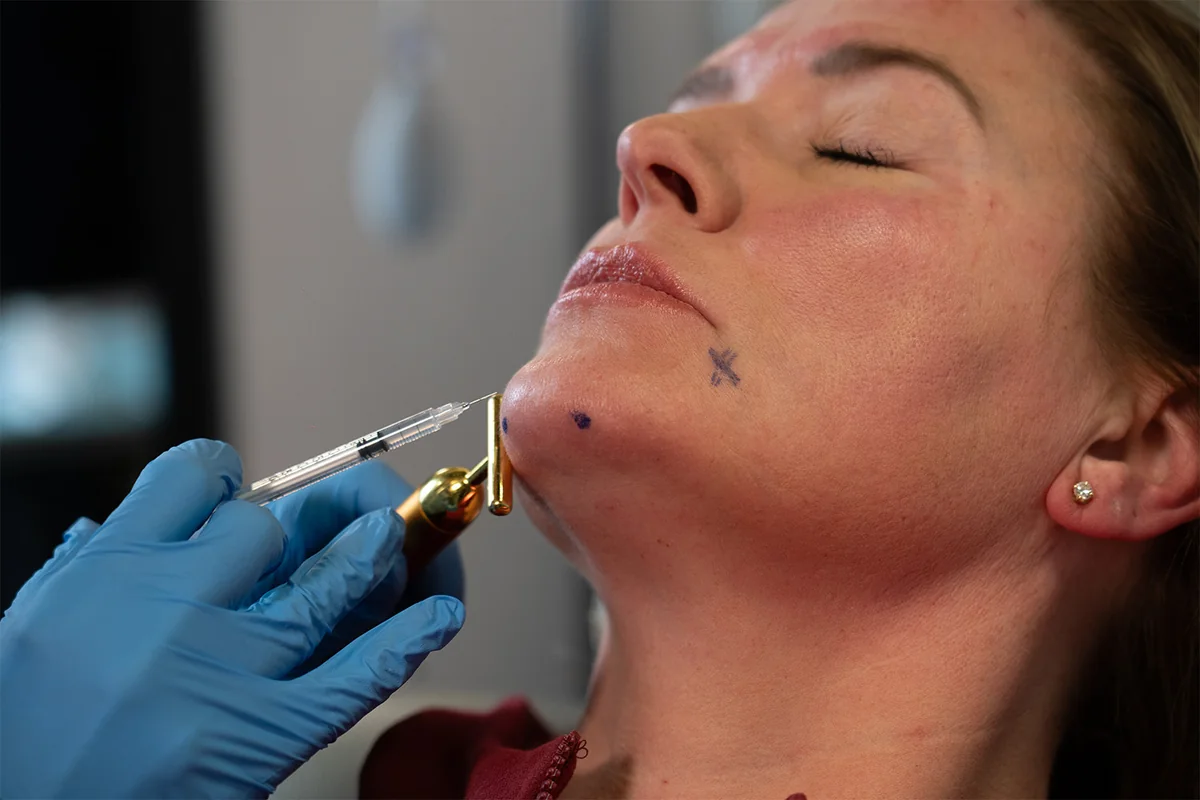
- Marking. Injection points are marked along each band while the muscle is engaged, which is why you may be asked to hold the grimace briefly.
- Injection. Product is placed into the marked points along each cord. The treatment portion typically takes about 15 minutes.
- Aftercare. There is no required downtime. Your injector will give you specific aftercare guidance for the neck at your appointment.
- Follow-up. A two-week follow-up visit is where touch-ups and dose adjustments are handled.
Small bruises or tenderness at the injection points are possible and are usually short lived. Onset is not immediate; neurotoxin takes time to take effect, which is why the follow-up visit is scheduled at two weeks rather than sooner.
How Long Do Platysmal Band Results Last?
Results typically last about 3 to 4 months, which is in line with on-label expectations for botulinum toxin type A. As the treatment video notes, lifestyle and metabolism both influence how long an individual result holds.
Several factors shift that window. A stronger, more active platysma tends to recover sooner. A faster metabolism can shorten duration. Treatment area and the number of units used also influence how long a result holds. Many patients schedule maintenance before the effect fully wears off, since it is generally easier to maintain a softened band than to restart from a fully recovered one. Individual results vary.
Side Effects and Who Should Avoid Platysmal Band Botox
The neck deserves more caution than a forehead, and it is worth being direct about why. The platysma sits close to muscles involved in swallowing and in holding the head upright, so dose and placement matter more here than in some other areas. This is a treatment where injector experience is doing real work.
Commonly reported effects are temporary and local: small bruises, tenderness, or mild swelling at the injection points. Less commonly, neurotoxin placed in the neck can affect nearby muscles, which may produce temporary swallowing difficulty or a sense of neck weakness. Anything of that kind should be reported to your provider.
Tell your injector before treatment if you are pregnant or breastfeeding, have a neuromuscular condition, have had a previous reaction to a botulinum toxin product, or are taking medication that affects neuromuscular transmission. Candidacy is assessed at your consultation, and a provider may reasonably recommend against treatment.
We cover neck injection safety in more depth in our guide to whether Botox in the neck is dangerous, including danger zones, side effects, and the medical uses of neck neurotoxin.
When Neurotoxin Is Not the Answer for a Sagging Neck
Neurotoxin relaxes muscle. It does not tighten skin, remove fat, or reposition tissue. If your primary concern is loose skin rather than standing cords, injections will likely underdeliver, and it is better to know that before you book than after.
Situations where neurotoxin alone is usually not the answer:
- Significant skin laxity. When the skin itself has lost elasticity and hangs, relaxing the muscle beneath it does not lift it.
- Crepey skin texture. This is a skin-quality concern. Resurfacing and collagen-stimulating approaches such as microneedling target it more directly.
- Substantial submental fat. Fat under the chin is a volume problem, and Kybella addresses that target specifically.
- Advanced structural laxity. Where the change is structural, a surgical neck lift or platysmaplasty, which tightens and repositions the platysma surgically, is the procedure that addresses it. That is a surgical decision made with a surgeon, not a med spa treatment.
Most patients are a mixture, and a realistic plan often sequences more than one approach over time. A consultation that tells you neurotoxin will only solve part of your concern is a more useful consultation than one that promises it will solve all of it.
What Does Platysmal Band Treatment Cost?
Express Med Spa prices neurotoxin by the unit. As published on our treatment pages, Botox and Xeomin start from $10.95 per unit, and pricing varies based on the number of units needed and the treatment areas selected.
Applied to platysmal bands, a treatment built around roughly 40 units would therefore start from approximately $438. Treat that as a starting point rather than a quote. If you have two prominent bands instead of four, your total is lower. If you combine the neck with the jawline or another area in the same visit, it is higher.
Your total cost is reviewed with you before treatment, and your exact plan is confirmed at your complimentary consultation. Prices are subject to change. It is also worth checking our current specials, since neurotoxin offers change periodically.
Platysmal Band Treatment at Our Chicagoland Locations
Platysmal band treatment is available at all four Express Med Spa locations, each staffed by licensed nurse practitioners:
Patients in the south suburbs can also read our dedicated page on platysmal band treatment in Frankfort, IL, which covers Botox and Xeomin neck rejuvenation for that location.
Platysmal Band Treatment FAQs
What Are Platysmal Bands?
Platysmal bands are the vertical cords that appear on the front of the neck as the platysma muscle becomes more active and less elastic with age. They can create a pulling or sagging look along the jawline. Relaxing the muscle with Botox or Xeomin may soften these bands, and a consultation confirms whether you are a candidate.
How Many Units of Botox Treat Platysmal Bands?
It varies by anatomy, but a common approach places about 10 units per band across roughly four bands, for a total near 40 units. Your injector marks the active cords while you tense the muscle, so the final number depends on how many bands you have and how strong they are. Your plan is confirmed at your consultation.
Is Neck Band Botox the Same as a Nefertiti Lift?
The two overlap but are not identical. A Nefertiti lift places neurotoxin along the jawline border and the upper platysma to reduce the downward pull on the lower face. Treating platysmal bands targets the vertical cords themselves. Many treatment plans combine both patterns in one appointment. Results vary.
What Is the Platysma Muscle?
The platysma is a broad, thin sheet of muscle that runs from the upper chest and shoulder area across the front of the neck and attaches near the jawline and lower face. It acts as a depressor, meaning it pulls the lower face downward. When it thickens or tightens with age, its edges show as visible bands.
Can Botox Get Rid of Turkey Neck?
Neurotoxin may improve the muscular part of what people call turkey neck, softening the vertical cords and easing the downward pull. It does not tighten loose skin or remove fat. If skin laxity is the main issue, an injector will typically say so at your consultation and discuss other options. Results vary.
Can You Fix Platysmal Bands Without Surgery?
In many cases the muscular component responds to neurotoxin injections, which take about 15 minutes and require no downtime. Neurotoxin relaxes the band rather than removing tissue, so it is a temporary softening rather than a permanent correction. Significant skin laxity usually needs a different approach. Results vary.
What Are the Side Effects of Botox in the Platysmal Bands?
Common effects are temporary and local, such as small bruises, tenderness, or mild swelling at the injection points. Because the neck contains muscles used for swallowing and head position, dosing and placement matter. Choosing an experienced injector reduces risk. Tell your provider about any neuromuscular condition before treatment.
What Is the Best Treatment for an Aging Neck?
It depends on which part of the neck is aging. Neurotoxin addresses movement and muscle bands. Skin quality and crepey texture respond better to resurfacing or collagen-stimulating options. Loose skin and fat are structural and may need something else entirely. A consultation sorts out which pattern you have. Results vary.
Is There Anything Better Than Botox for Neck Wrinkles?
Nothing is better in every case, because the right choice follows the cause. Neurotoxin works on wrinkles driven by muscle movement. Microneedling and collagen-stimulating treatments address skin texture and quality. Many plans combine approaches over time. Your injector recommends the sequence at your consultation. Results vary.
Is Botox in the Neck Worth It?
For patients whose neck bands are driven by muscle activity, it can be a reasonable nonsurgical option: about 15 minutes, no required downtime, and a softening effect that typically lasts 3 to 4 months. It is less useful when loose skin is the main concern. A consultation is the honest way to tell.
How Do You Get Rid of Neck Wrinkles Permanently?
There is no permanent fix for neck wrinkles. Neurotoxin results are temporary and wear off as muscle movement returns. Skin treatments improve quality gradually and need maintenance. Sun protection and consistent skincare help preserve whatever result you achieve. Treat permanence claims from any provider with caution.
How Many Units of Botox for Neck Lines Should You Get?
The number depends on the pattern being treated, not on a fixed formula. Vertical platysmal bands are commonly dosed near 10 units per band. Horizontal neck lines are a different concern and are dosed differently. Your injector assesses your muscle activity and confirms the plan at your consultation.
How Long Does Neck Botox Last?
Results typically last about 3 to 4 months, which is in line with on-label expectations for botulinum toxin type A. Metabolism, muscle strength, and lifestyle all influence individual duration. Many patients schedule maintenance appointments before the effect fully wears off. Individual results vary.
Is Botox for Neck Lines the Right Choice for Aging Skin?
It is the right choice when muscle movement is causing the concern, and the wrong choice when the concern is loose or crepey skin. Neurotoxin relaxes muscle; it does not tighten skin or remove fat. An injector who tells you that plainly is giving you useful information. Results vary.
Book Your Neck Consultation at Express Med Spa
If you are seeing vertical cords on your neck and want to know whether they are muscular, a consultation is the way to find out. Our nurse practitioners will assess your platysma, tell you honestly how much of your concern neurotoxin can address, and build a plan around that.
Express Med Spa is led by Stefanie Drozd, MSN, APRN, founder and Medical Director, and treatments are performed by licensed nurse practitioners.
Book your complimentary consultation at the Express Med Spa location nearest you.
Watch the platysmal band treatment video and read the full transcript →
For the upper face, a lighter approach is also an option. See preventative Botox for how a 30 unit session is planned.
Meet our nurse practitioner-led team.That’s exactly why we offer free consults.
Meet our nurse practitioner-led team.
That’s exactly why we offer free consults.
🧬 Personalized care that fits your goals.

Stefanie Drozd, APRN
Founder & Nurse Practitioner
354
5 Star Average Rating
Five Star Reviews... and growing
Let’s Talk About Your Skin Goals
You don’t have to guess what treatment is right for you. Book a complimentary consultation and let our licensed professionals help you choose the safest and most effective option. We will walk you through your options and help you decide what makes the most sense for your skin, goals, and budget.Express Med Spa Team
Share

Personalized, Judgment-Free Care
That’s exactly why we offer free consults.
🧬 Just personalized care that fits your goals.
Stefanie Drozd, APRN
Founder & Nurse Practitioner
You don’t have to guess what treatment is right for you. Book a complimentary consultation and let our licensed professionals help you choose the safest and most effective option. We will walk you through your options and help you decide what makes the most sense for your skin, goals, and budget.Express Med Spa Team
354
5 Star Average Rating
Five Star Reviews... and growing
Let’s Talk About Your Skin Goals