

Weight Loss & Body Contouring
Most people arrive at medical weight loss the same way: they have already tried. Calorie counting, a gym membership, a run of intermittent fasting, maybe a conversation with a primary care provider that ended in “eat less, move more.” When the weight comes back anyway, the conclusion is usually self-blame. It is almost never the right conclusion.
The short answer: medical weight loss is a supervised program in which a clinician reviews your health history and lab work, then prescribes and monitors treatment. At a med spa it covers four things. GLP-1 medication programs are the option built to reduce overall weight. Lipotropic and B12 injections are adjuncts. Phentermine is an oral alternative for a narrower group. Body contouring reshapes an area and does not reduce weight at all.
In a short video on why patients turn to a med spa for weight loss, Jackie Umgelder, Lead Medical Assistant at Express Med Spa, explains what happens when a primary care visit does not produce the support a patient needs, and describes the range of options our medical team draws from. This guide is the written companion to that video.
In This Guide
- Medical weight loss options compared
- Option 1: Supervised GLP-1 medication programs
- Common side effects and when to call the clinic
- Option 2: Lipotropic and B12 injections
- Option 3: Phentermine and pill-form appetite suppressants
- Option 4: Non-invasive body contouring is not weight loss
- Who qualifies for prescription medical weight loss
- Who is not a candidate
- How to choose between them
- What happens at a medical weight loss consultation
- What happens when you stop the medication
- What medical weight loss costs, and what insurance covers
- Your care team
- Medical weight loss in Frankfort, Shorewood, La Grange, and Mount Greenwood
- Frequently asked questions
Medical Weight Loss Options Compared
A med spa with medical oversight offers four categories of weight-loss treatment, and only one of them is designed to reduce overall body weight on its own. The table below is the fastest way to see which is which before reading the detail underneath.
| Option | What it changes | Route | Standalone or adjunct | Who it tends to fit |
|---|---|---|---|---|
| Supervised GLP-1 program | Appetite and satiety signaling, gastric emptying, blood sugar regulation | Weekly injection, prescription | Standalone | Adults meeting clinical criteria who have stalled with diet and exercise |
| Lipotropic injections | Supports fat metabolism; does not regulate appetite | Weekly injection | Adjunct | Patients already making progress who want metabolic support |
| B12 injections | Corrects deficiency, supports energy and nerve function | Injection | Adjunct | Patients low in B12 who need energy while eating in a deficit |
| Phentermine | Suppresses the sensation of hunger | Oral, prescription | Standalone for a narrower group | Patients for whom injectable therapy is not appropriate or not wanted |
| Non-invasive body contouring | Shape of a specific area; not overall body weight | In-office device treatment | Neither. It is not weight loss | Patients at or near goal weight with one area that has not followed |
Candidacy for any prescription option is determined at your consultation after a health assessment and lab review, not from a table. Individual results vary.
Not sure which option fits? Book a complimentary consultation or call 877-E-MED-SPA.
Option 1: Supervised GLP-1 Medication Programs
A GLP-1 medication program is the option built for meaningful weight reduction, and at Express Med Spa it is nurse practitioner-led rather than sold as a subscription. GLP-1 stands for glucagon-like peptide-1, a hormone your body releases naturally after you eat. It signals fullness to the brain, slows how quickly the stomach empties, and helps regulate blood sugar. GLP-1 medications mimic that hormone, so your body receives steady satiety signals instead of the constant hunger and food noise that undermine most diets.
The practical effect is that smaller portions feel satisfying and cravings lose their grip. For patients whose weight is driven by hormonal changes, insulin resistance, perimenopause, or a metabolism that has adapted after years of dieting, this is the option most likely to move the number. Results vary by individual.

What a supervised program includes
The monthly program fee covers the medication, required lab work review, a comprehensive health assessment, and ongoing clinical check-ins where your dosage and plan are adjusted to your progress. Our GLP-1 Medical Weight Loss Program runs out of all four clinics. Check-ins typically take 20 to 30 minutes and cover your injection, progress review, side-effect management, and any dose changes.
Dosing starts low and increases gradually. That titration is deliberate: it keeps side effects manageable while your body adjusts, and it is one of the clearest arguments for supervision. Most patients begin noticing appetite changes and early weight loss within the first 2 to 4 weeks, with more significant results typically visible by weeks 8 to 12 as dosing reaches an effective level. Individual results vary.
Single GLP-1 and dual GLP-1/GIP options
The program includes both a single-pathway GLP-1 option and a compounded dual-acting peptide option that adds a second hormone pathway, GIP, to further support metabolic health. Some patients respond better to one class than the other, which is why the plan is matched to you rather than assigned by default. Your nurse practitioner reviews your history and labs to determine which fits.
Why not just order it online?
Online-only options ship medication with little more than an intake form in between, and what they skip is the medicine around the medication. A supervised program pairs the same class of medication with baseline labs, dose management as your body responds, injection training, nutrition guidance, and a local clinical team that knows your history. If you develop persistent nausea in week six, only one of those arrangements has someone to call. If you have already tried a GLP-1 on your own, our team can evaluate where you are and build a supervised plan from there.
Common Side Effects and When to Call the Clinic
The side effects patients most often report early in a GLP-1 program are nausea, constipation, diarrhea, fatigue, and appetite changes. These tend to appear as dosing increases and are the main reason titration is gradual rather than fast. Your nurse practitioner monitors your response at each check-in and adjusts, including holding a dose rather than escalating it when that is the safer call.
Practical management is part of the program: aiming for at least 64 ounces of water daily, prioritizing protein and fiber at each meal, eating smaller and more frequent meals in the early weeks, rotating injection sites between abdomen, thigh, and upper arm, and storing medication as directed.
Call the clinic between visits rather than waiting for your next appointment if nausea or vomiting is persistent enough to affect hydration, if constipation does not resolve with the measures above, if you are unable to keep food or fluids down, or if you develop severe or persistent abdominal pain. Severe abdominal pain in particular should be reported promptly. If you have symptoms that feel like a medical emergency, seek emergency care first and tell us afterward. This page is educational and is not medical advice.
Option 2: Lipotropic and B12 Injections
Lipotropic and B12 injections are adjuncts that support the conditions for weight loss, not treatments that produce it on their own. Lipotropic injections, widely known as skinny shots, combine amino acids and vitamins, commonly methionine, inositol, and choline plus B12, that support the liver in processing and moving fat. Many patients add a weekly shot alongside a broader plan.
What they do not do is create a caloric deficit or regulate appetite. If your primary goal is meaningful weight reduction, these belong beside a supervised program rather than instead of one. Results vary.
B12 is worth understanding on its own terms. Vitamin B12 is essential for red blood cell production, nerve function, and converting food into usable energy. If you are deficient, correcting it can restore the energy you need to stay active and consistent, which matters a great deal when you are eating less. If your levels are already adequate, more B12 does not accelerate fat burning.
We have written about each in detail: whether lipotropic injections actually work for weight loss, what is actually in a lipotropic MIC injection, skinny shot side effects, and whether B12 shots help you lose weight.
Option 3: Phentermine and Pill-Form Appetite Suppressants
Phentermine is an oral prescription appetite suppressant, and it is the pill-form option Express Med Spa offers for patients who are not candidates for injectable therapy or do not want it. It works on the sensation of hunger rather than on the hormonal satiety pathway that GLP-1 medications target, which is why the two are not interchangeable and why one can suit a patient the other does not.
Candidacy is narrower. It depends on your health history, current medications, and cardiovascular picture, and it is reviewed by our nurse practitioner team alongside your lab work. Like every medication we prescribe, it is dispensed only when clinically appropriate. Results vary.
Phentermine compared with GLP-1 injections
| Phentermine | GLP-1 medication | |
|---|---|---|
| How it works | Suppresses appetite through the central nervous system | Mimics a satiety hormone; also slows gastric emptying |
| Route | Oral, taken daily | Weekly injection |
| Typical early side effects | Reviewed individually at consultation, including cardiovascular considerations | Nausea, constipation, diarrhea, fatigue, appetite changes |
| Dose management | Set and reviewed by your clinician | Titrated upward gradually over weeks |
| Main screening concern | Cardiovascular history and current medications | Thyroid and pancreatic history, GI conditions, pregnancy |
Which one is appropriate is a clinical decision made after your health assessment and lab review, not a preference you select in advance.
For a closer look at how the two compare, including who qualifies for each and what rules each one out, read our guide to GLP-1 vs. phentermine.
Option 4: Non-Invasive Body Contouring Is Not Weight Loss
Non-invasive body contouring changes the shape of a specific area and does not reduce overall body weight. This is the correction we make most often. A patient who is 40 pounds from their goal will not get there with contouring, and it is not a substitute for a weight-loss plan.
Where contouring earns its place is after the weight comes off, when a specific area has not responded the way the rest of the body did. Sequencing matters: weight first, shape second. Raising it at your consultation lets us build the order correctly rather than spending money on the wrong step.
Who Qualifies for Prescription Medical Weight Loss
Candidacy for our GLP-1 program follows standard clinical criteria: adults with a BMI of 30 or higher, or 27 or higher with a related metabolic concern such as insulin resistance or hormone-related weight changes including perimenopause. It is also a fit for patients who have plateaued with diet and movement alone.
Meeting a BMI threshold is the starting point, not the decision. Your nurse practitioner reviews your health history, your full medication and supplement list, and your lab work, and discusses risks, side effects, and alternatives before anything is prescribed. Candidacy is confirmed at the consultation.
Who Is Not a Candidate
Supervised GLP-1 therapy is not appropriate for everyone. Our nurse practitioner team reviews your history for, among other things:
- A personal or family history of medullary thyroid carcinoma or Multiple Endocrine Neoplasia syndrome type 2
- Current or recent pancreatitis
- Pregnancy, plans to become pregnant, or breastfeeding. Patients must use reliable contraception during the program
- Severe gastrointestinal disorders, including gastroparesis
- Type 1 or insulin-dependent diabetes requiring close specialist oversight
- Known hypersensitivity to GLP-1 receptor agonist medications
- Certain kidney or liver conditions identified during lab review
If any of these apply, it does not mean there is nothing available to you. It means the conversation starts somewhere else, and your consultation is where that alternative gets built.
How to Choose Between Them
The choice comes down to how much you have to lose and whether appetite is the obstacle. The honest framework is short:
- If you have a significant amount to lose and diet and exercise have repeatedly stalled, the supervised GLP-1 program is the option built for that goal.
- If you are already making progress and want metabolic and energy support, lipotropic or B12 injections are reasonable adjuncts.
- If injectable therapy is not appropriate for you, an oral appetite-suppressant prescription may be an alternative worth reviewing.
- If your weight is where you want it and one area has not followed, that is a contouring conversation.
What decides it is not a quiz. It is your health history, current medications, lab work, and goals, reviewed by a clinician who is accountable for the recommendation.
What Happens at a Medical Weight Loss Consultation
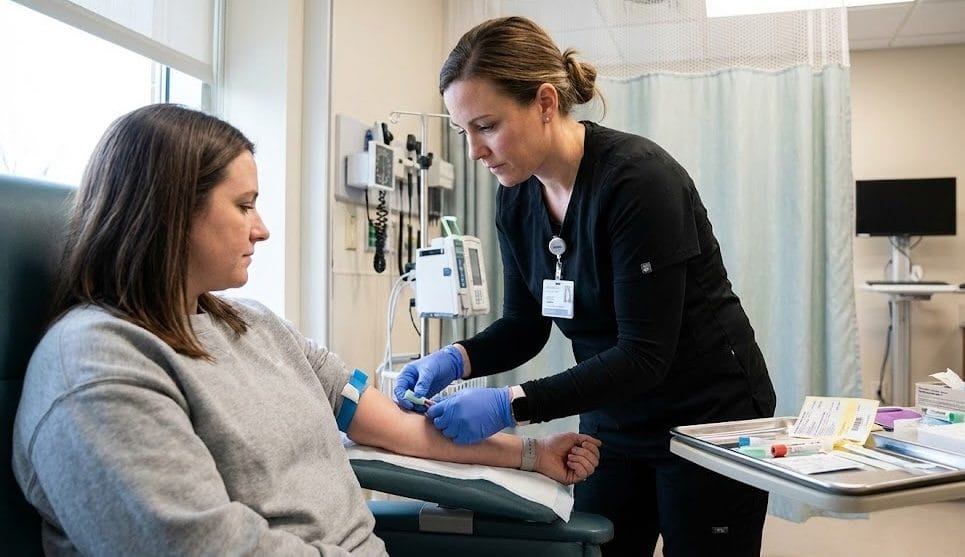
The consultation is complimentary, and it is where candidacy is decided. It follows the same sequence at every Express Med Spa location:
- Health and weight history review. What you have tried, what worked, what did not, and what changed.
- Medication and supplement reconciliation. Bring a list of everything you take, including over-the-counter products.
- Lab work. Labs must be current within 90 days. Our team tells you which panel is needed, or orders it.
- Eligibility and risk assessment. Your nurse practitioner reviews criteria, contraindications, risks, side effects, and alternatives.
- Options and cost discussion. Which treatments fit, what each involves, and what the program costs before you commit.
- Baseline and initial plan. Measurements may include weight, body composition, and other relevant health markers.
- Follow-up cadence. Regular check-ins to review progress, manage side effects, and adjust dosing.
- Plateau, maintenance, and transition planning. Built into the program rather than left until the end.
Come with your health goals, weight history, and any relevant prior lab results. Enrollment is a clinical decision made with you, not a checkout page.
What Happens When You Stop the Medication
You do not necessarily stay on medication indefinitely, and how you come off it is planned rather than improvised. This is where unsupervised weight loss most often unravels: appetite returns, the structure that was holding the deficit in place disappears at the same moment, and the weight follows.
Our nurse practitioner team provides guidance on maintaining your weight with lifestyle adjustments and, when appropriate, on transitioning off medication gradually rather than stopping abruptly. Progress is tracked beyond the scale, including body composition, so that maintenance is measured against something more useful than a single number. Individual outcomes vary and are reviewed at your check-ins.
What Medical Weight Loss Costs, and What Insurance Covers
At Express Med Spa the medically supervised GLP-1 program runs $650 to $950 per month. That figure covers the GLP-1 program specifically and does not apply to the other three options, which are priced separately.
The monthly program fee includes:
- The medication itself
- Required lab work review
- A comprehensive health assessment
- Ongoing clinical check-ins with dosage and plan adjustment
- Nutrition guidance
- Injection training
Pricing may vary based on your individualized dosage and program phase. The consultation is complimentary, financing options are available, and prices are subject to change. Current offers are listed on our monthly specials page.
Does insurance cover medical weight loss?
Coverage for weight-loss medication varies widely by plan and many plans do not cover it, so the program is generally a self-pay commitment. That is worth naming plainly, because program cost is a real gate and we would rather you plan for it than be surprised by it. If you intend to submit to your plan, ask at your consultation what documentation we can provide.
Ready to find out what your plan would cost? Book a complimentary consultation at any of our four locations, or call 877-E-MED-SPA.
Your Care Team
Express Med Spa is nurse practitioner-led, which means a licensed nurse practitioner reviews your labs, decides whether therapy is appropriate, writes the prescription, and adjusts your dose. Our medical weight loss program is led by Stefanie Drozd, MSN, APRN, founder and Medical Director, who oversees clinical protocol across all four clinics.
Jackie Umgelder, Lead Medical Assistant, supports patients through the program at our Frankfort and Mount Greenwood locations, assisting with dosing education, progress tracking, and habit reinforcement. Jackie was a patient at Express Med Spa before joining the clinical team and is now an Express Med Spa employee. Her experience is her own, is not typical, and individual results vary.
Medical Weight Loss in Frankfort, Shorewood, La Grange, and Mount Greenwood
Medical weight loss is available at all four Express Med Spa clinics, each with its own nurse practitioner team and its own consultation schedule.
Frankfort
Medical weight loss in Frankfort runs out of our downtown Frankfort clinic on White Street, serving the Lincoln-Way area including Mokena, New Lenox, and Tinley Park, plus the wider Will County area. This is also where our Frankfort med spa offers the rest of our services.
Shorewood
Medical weight loss in Shorewood serves Joliet, Plainfield, Minooka, Crest Hill, Channahon, Romeoville, and Lockport, just west of the I-55 corridor. See all Shorewood services.
La Grange
Medical weight loss in La Grange serves La Grange, Western Springs, Brookfield, La Grange Park, Countryside, and Hinsdale from our Burlington Avenue clinic. See all La Grange services.
Mount Greenwood, Chicago
Medical weight loss in Mount Greenwood serves Chicago’s South Side including Beverly, Morgan Park, Evergreen Park, Oak Lawn, and Alsip, from our 111th Street clinic. See all Mount Greenwood services.
Every patient starts with a complimentary consultation. You can book online or call 877-E-MED-SPA.
Frequently Asked Questions
What weight loss options does a med spa offer?
A med spa with medical oversight typically offers a supervised GLP-1 medication program, lipotropic and B12 injections, an oral appetite-suppressant prescription such as phentermine, and non-invasive body contouring. Only the GLP-1 program is built for significant weight reduction on its own. The injections are adjuncts, and contouring addresses shape rather than weight. A consultation confirms which fits your history and goals.
Who qualifies for medical weight loss medication?
Candidacy at Express Med Spa follows standard clinical criteria: adults with a BMI of 30 or higher, or 27 or higher with a related metabolic concern such as insulin resistance or hormone-related weight changes including perimenopause. Patients who have plateaued with diet and movement alone may also be a fit. Your nurse practitioner confirms candidacy after reviewing your health history, medications, and lab work.
Are weight loss injections or pills better?
Neither is better in general; they work differently and suit different patients. GLP-1 injections mimic a satiety hormone and also slow gastric emptying, which is why they are the option built for larger reductions. Phentermine is an oral appetite suppressant that acts on the sensation of hunger and suits a narrower group, with cardiovascular history a key screening factor. The decision is clinical, made after a health assessment and lab review.
What lab work is needed before starting?
Every patient has lab work reviewed before therapy is prescribed, and labs must be current within 90 days. Our team tells you which panel is needed or orders it for you. You also bring a list of all current medications and supplements, including over-the-counter products, so your nurse practitioner can check for interactions.
What side effects should I report?
Common early side effects of GLP-1 medication include nausea, constipation, diarrhea, fatigue, and appetite changes, and these are monitored and managed at your check-ins. Call the clinic between visits if nausea or vomiting is affecting your hydration, if constipation does not resolve, if you cannot keep food or fluids down, or if you develop severe or persistent abdominal pain. Seek emergency care first for anything that feels like an emergency.
Do weight loss injections work without diet and exercise?
Not reliably, and that is not how the program is designed. GLP-1 medication reduces appetite so that a caloric deficit becomes achievable, and our team provides nutrition guidance alongside it. Lipotropic and B12 injections support fat metabolism and energy but do not create a deficit. Nutrition and movement remain part of every plan. Results vary.
How much does medical weight loss cost at Express Med Spa?
The medically supervised GLP-1 program runs $650 to $950 per month and includes medication, lab review, health assessment, clinical check-ins, nutrition guidance, and injection training. That range applies to the GLP-1 program and not to the other options, which are priced separately. Pricing varies with your individualized dosage and program phase, financing is available, and prices are subject to change.
Does insurance cover medical weight loss?
Coverage varies widely by plan and many plans do not cover weight-loss medication, so the program is generally self-pay. Ask at your consultation what documentation we can provide if you intend to submit to your plan.
How long before I see results?
Most patients begin noticing appetite changes and early weight loss within the first 2 to 4 weeks. More significant results are typically visible by weeks 8 to 12, as dosing reaches an effective level. Dosing increases gradually to keep side effects manageable. Individual results vary based on starting point, health history, and consistency.
What happens if I stop weight loss medication?
Appetite typically returns when medication stops, which is why the transition is planned rather than abrupt. Our nurse practitioner team provides guidance on maintaining your weight with lifestyle adjustments and, when appropriate, on tapering rather than stopping suddenly. Progress is tracked beyond the scale, including body composition. Individual outcomes vary and are reviewed at your check-ins.
Is body contouring the same as weight loss?
No. Non-invasive body contouring changes the shape of a specific area and does not reduce overall body weight. It is appropriate after weight loss, when one area has not responded the way the rest of the body did, and it is not a substitute for a weight-loss plan.
Can I get medical weight loss at any Express Med Spa location?
Yes. The program runs at all four clinics: Frankfort, Shorewood, La Grange, and Mount Greenwood in Chicago. Each has its own nurse practitioner team, and every patient starts with a complimentary consultation.
Meet our nurse practitioner-led team.That’s exactly why we offer free consults.
Meet our nurse practitioner-led team.
That’s exactly why we offer free consults.
🧬 Personalized care that fits your goals.

Stefanie Drozd, APRN
Founder & Nurse Practitioner
354
5 Star Average Rating
Five Star Reviews... and growing
Let’s Talk About Your Skin Goals
You don’t have to guess what treatment is right for you. Book a complimentary consultation and let our licensed professionals help you choose the safest and most effective option. We will walk you through your options and help you decide what makes the most sense for your skin, goals, and budget.Express Med Spa Team
Share

Personalized, Judgment-Free Care
That’s exactly why we offer free consults.
🧬 Just personalized care that fits your goals.
Stefanie Drozd, APRN
Founder & Nurse Practitioner
You don’t have to guess what treatment is right for you. Book a complimentary consultation and let our licensed professionals help you choose the safest and most effective option. We will walk you through your options and help you decide what makes the most sense for your skin, goals, and budget.Express Med Spa Team
354
5 Star Average Rating
Five Star Reviews... and growing
Let’s Talk About Your Skin Goals